Thinning hair and an irritated scalp usually point to the same root cause: poor nourishment at the follicle level. Methi, also called fenugreek, is one of the few kitchen staples backed by both tradition and basic chemistry for treating this. Here’s how to use it properly.
What Methi Actually Does for Hair
Fenugreek seeds contain diosgenin, a plant compound structurally similar to steroid precursors. Some early research suggests diosgenin may interfere with DHT, the hormone linked to pattern thinning. A randomized, placebo-controlled trial by Heinrich et al. tested a fenugreek-based supplement on men and women with low to moderate hair loss and found measurable improvement in hair and nail quality after regular use. That said, most of the research on fenugreek and hair is still small in scale, so treat it as supportive evidence, not proof. Seeds also carry lecithin, protein, and nicotinic acid, which support the scalp environment more directly.
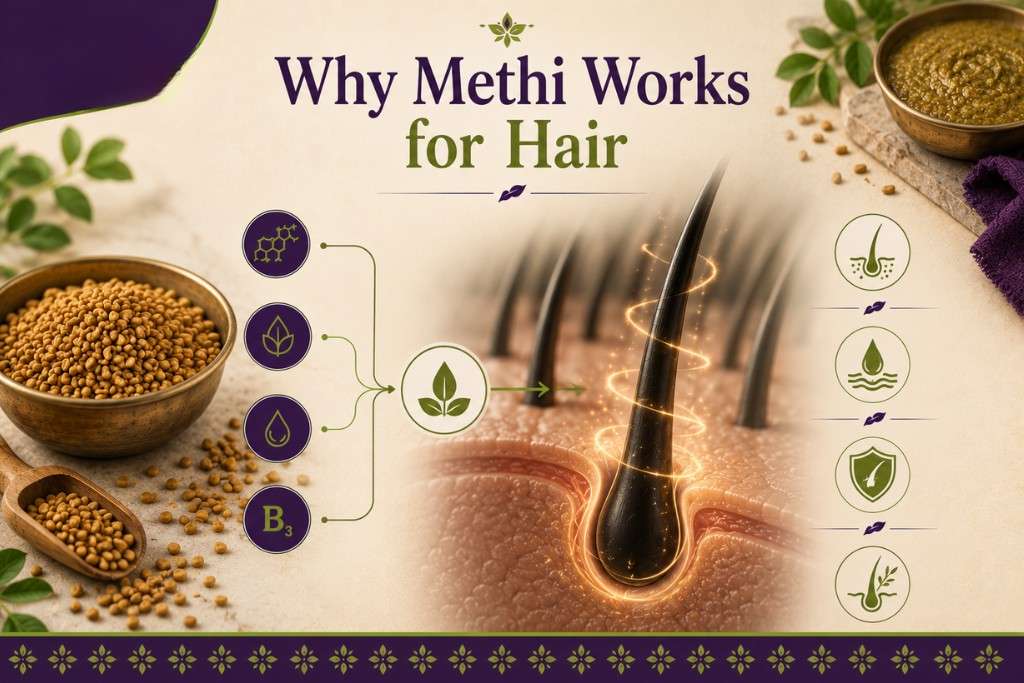
Here’s what each component contributes:
Diosgenin may help limit DHT activity at the follicle, based on preliminary research.
Mucilage (a natural gel released when seeds soak) hydrates the scalp and reduces dryness.
Lecithin and lipids condition strands and support follicle health.
Nicotinic acid helps calm an inflamed or itchy scalp.
Use fenugreek as a complement to a full hair care routine, not a replacement for medical treatment if you’re dealing with significant hair loss. If shedding is sudden, patchy, or severe, see a dermatologist first.
How to Make a Fenugreek Hair Mask
Step 1: Soak the seeds (8 to 12 hours) Soak two to three tablespoons of raw methi seeds in filtered water overnight. This softens the outer hull and starts releasing diosgenin and mucilage into the water.
Step 2: Blend into a paste (5 minutes) Drain the seeds and set the soaking water aside for later. Grind the softened seeds into a smooth paste. Add a splash of water if needed to keep it from turning too dry or grainy.
Step 3: Add yogurt (2 minutes) Mix in two tablespoons of plain yogurt. This adds moisture and makes the paste easier to spread through hair.
Step 4: Apply to the scalp (30 minutes) Part your hair into sections. Massage the paste directly into your scalp, not just the lengths of your hair, since the scalp is where follicle repair happens. Leave it on for 30 minutes, then rinse.
Using Methi Water as a Lighter Alternative
If a paste feels like too much upkeep, use the leftover soaking water instead. Strain it after the overnight soak and pour it over your scalp, or transfer it to a spray bottle for quick daily use.
Methi water carries the same water-soluble compounds as the paste, just in a lighter form. Spray it on dry roots between wash days, or use it as a final rinse after shampooing. It won’t leave residue the way a paste can, which makes it easier to fit into a regular routine.
Paste
Water rinse
Best for
Deep, weekly scalp treatment
Light, frequent use between washes
Frequency
Once a week
Daily or every other day
Effort
Higher, requires blending and a 30-minute sit
Low, strain and spray or pour
Residue
Can feel heavy if not rinsed well
None
Getting the Application Right
A few mistakes are common with methi treatments, and most are avoidable:
Grind it completely smooth. Leftover bits of seed hull get stuck in hair and are hard to rinse out.
Rinse with lukewarm or cool water, not hot. Hot water cooks the starches in the paste and makes them stick to strands instead of washing away.
Follow up with a light oil. Methi hydrates the scalp but doesn’t replace a sealing oil on the lengths of your hair.
Stick to once a week. Overusing any scalp treatment, methi included, can leave hair feeling dry or stripped.
Where This Fits in a Full Hair Care Routine
Methi works best as one part of a routine, not a standalone fix. Treat it as a weekly scalp treatment and build the rest of your routine around it:
Wash with a mild, sulfate-free shampoo so you’re not undoing the scalp benefits between treatments.
Oil your scalp lightly a day or two before you shampoo, separate from your methi treatment day.
Trim your ends every few months to prevent breakage from masking as “hair loss.”
Eat enough protein and iron, since deficiencies in either show up as shedding regardless of what you apply topically.
Key Takeaways
Soak methi seeds overnight, every time. This is what releases the mucilage and diosgenin. Skipping this step gives you a much weaker treatment.
Use the paste and the water differently. Apply the paste as a once-weekly deep treatment, and use the strained water as a lighter rinse or spray during the rest of the week.
Diosgenin research is still early. It may help limit DHT activity, but treat this as a supportive ingredient, not a substitute for medical treatment if you have significant hair loss.
Consistency matters more than intensity. One weekly treatment done for two to three months will show more than daily treatments done for two weeks and then abandoned.
Pair it with basic scalp habits. Gentle shampoo, regular light oiling, and enough protein and iron in your diet all matter as much as the methi treatment itself.
Protect your ends separately. Methi treatments work on the scalp and roots. Your ends need their own care, usually a leave-in conditioner or light oil.
The Bottom Line
Soak your methi seeds overnight, then choose between a paste for deep treatment or the strained water for a lighter, more frequent option. Apply consistently once a week and pair it with basic scalp care: gentle products, regular oiling, and patience, since hair growth cycles take months, not days.
At Gardenia Whispers, we build our products around ingredients like these because they’ve held up over generations of use, not because they’re trendy. If you want a ready-made version of this routine, our fenugreek-based scalp range is formulated the same way you’d make it at home, minus the mess.
Methi for Hair Growth: Frequently Asked Questions
Does methi actually regrow hair?
Methi may support hair health and reduce shedding by improving scalp condition and possibly limiting DHT activity, but there's no strong clinical evidence that it regrows hair on its own. It works best alongside a full hair care routine, not as a standalone treatment for significant hair loss.
How long before you see results?
Most people who use methi consistently report changes after 8 to 12 weeks, since hair growth cycles take months rather than days. A single treatment or a few weeks of use won't show much difference.
Can you use methi water every day?
Yes. Methi water is light enough for daily use as a spray or rinse. The thicker paste, however, is meant for weekly use only, since overuse can leave hair feeling dry or stripped.
Does methi work for all hair types?
Most hair types tolerate methi well, though very dry or curly hair may need extra oil afterward to offset the drying effect of the paste. If you have a known allergy to legumes, patch test first, since fenugreek belongs to the same plant family as peanuts and chickpeas.
Are there any side effects?
Topical use is generally low risk. Some people notice a mild smell that lingers after rinsing. If you take fenugreek orally as a supplement, it can cause digestive upset and may lower blood sugar, which matters if you're on diabetes medication.
Can we apply fenugreek seeds paste on hair?
Yes. The paste is meant to go on the scalp and roots rather than the lengths of your hair. Soak whole fenugreek seeds overnight, grind them smooth, and apply directly to the scalp for about 30 minutes before rinsing. Avoid leaving it on for hours or overnight, since it can dry out and become hard to wash off.
What is the best way to take fenugreek for hair growth?
Topical use, either as a paste or a strained water rinse, has more direct evidence behind it than taking fenugreek as an oral supplement. If you prefer supplements, look for a standardized extract and check with a doctor first, especially if you're on any medication, since fenugreek can affect blood sugar. For most people, a weekly scalp paste paired with a lighter water rinse between washes is the simplest and safest approach.
How much time does methi take to regrow hair?
There's no fixed timeline, and methi isn't proven to regrow hair on its own. Most people who use it consistently notice improved scalp condition and reduced shedding within 8 to 12 weeks. Any actual regrowth, if it happens, tends to show up gradually over 3 to 6 months, in line with normal hair growth cycles.
This information is for general knowledge only and is not a substitute for professional medical advice. Individual results may vary.