The black pepper trade is one of the largest spice trades in the world. Yet most consumers purchasing black pepper have little idea what they are actually buying.
There is a vast disparity between black pepper price today and the price of kali mirch in India – from the cheapest wholesale pepper that has passed through five middlemen, to the finest single-origin pepper with its flavour and nutrition fully intact. This disparity in prices is not accidental. It tells you precisely what you are buying.
Here is a guide explaining why there is such a wide gap between pepper prices across the supply chain, and why paying more for the right pepper is almost always the better choice.
What Is the Black Pepper Rate Today in India?
The current price of black pepper depends entirely on where you are buying from and how far down the supply chain it is.
The prices in the pepper industry can be classified into three broad categories:
Farm gate price pepper – the actual amount the farmer receives for their produce
Wholesale pepper price – what traders pay after collecting from various farmers
Retail price – the price consumers pay after the pepper has passed through four to five intermediaries, each adding their margin and each with a motivation to compromise quality to protect that margin
The outcome? The kali mirch price you pay at the retail level almost never reflects the quality of pepper at its point of origin. This is especially true for premium growing regions such as Wayanad, where the Wayanad pepper price at the source differs completely from the blended lot price you find in the broader pepper market price India index.
Why Wayanad Pepper Commands a Different Price
Not all black pepper is grown equally. This is best understood when you compare prices across growing regions – and Wayanad makes the clearest case.
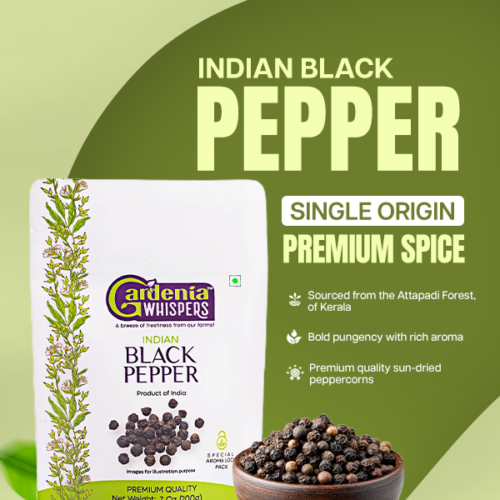
Wayanad, located in Kerala, is one of India’s finest pepper-growing regions. Its high altitude, reddish laterite soil, and steady monsoon rainfall produce pepper with significantly higher natural piperine content – the active alkaloid compound that gives black pepper its heat, pungency, and documented health benefits. The Wayanad pepper price reflects this genuine quality, not marketing. Explore our Indian black peppersourced directly from single-origin farms to understand the difference in person.
What makes Wayanad pepper unique:
Grown on vines trained on indigenous trees – traditional farming that allows pepper to mature naturally before harvesting
Harvested after complete ripening – not picked prematurely to meet production quotas
Naturally sun-dried – preserving the volatile oils and piperine content essential for top-grade pepper flavour and potency
Peppers grown under stress conditions at high altitude accumulate a higher concentration of active compounds in the fruit. This is not a marketing claim – it is an established fact of plant botany and is why single-origin pepper consistently outperforms blended commodity pepper on every measurable quality metric.
When you purchase kali mirch purely on the basis of the lowest available market price for pepper in India, you are most likely getting pepper that was harvested young and machine-dried – stripped of the very compounds that make black pepper worth consuming. Read our full guide on black pepper benefits to understand exactly what you lose when quality is sacrificed for price.
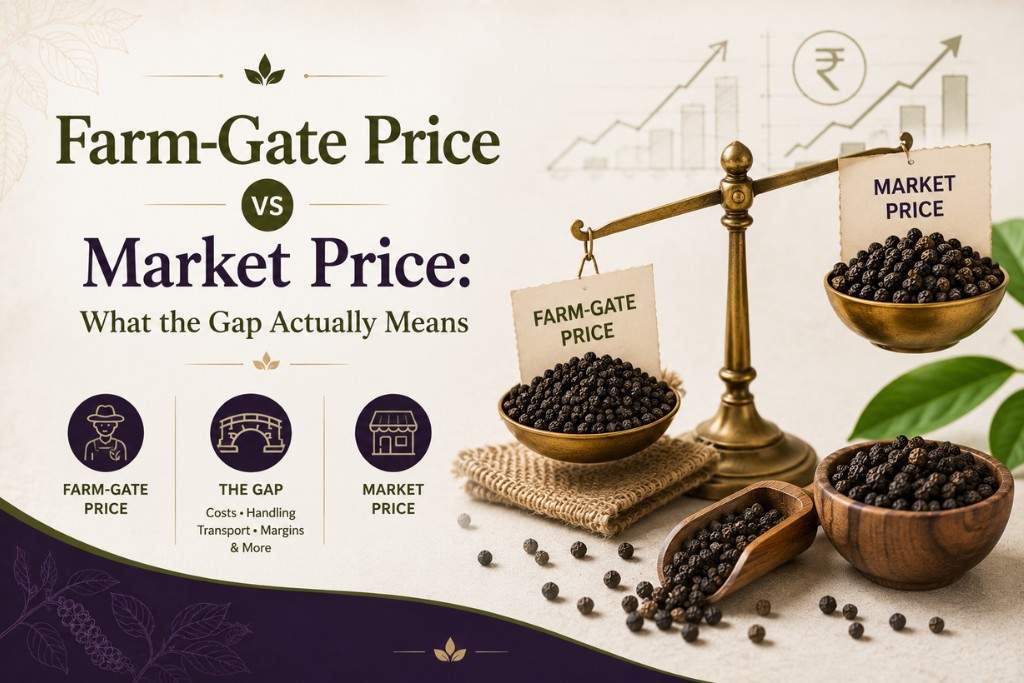
Farm-Gate Price vs Market Price: What the Gap Actually Means
This is the part of the black pepper price conversation that most brands tend to avoid.
The farm gate price pepper refers to the price a farmer receives immediately after harvest. In general, this figure is significantly lower than the wholesale pepper price prevailing in markets such as Kochi or Chennai – because by the time the pepper reaches a wholesaler, multiple parties have added their margins along the chain.
When brands buy their spices from open markets, what they receive is blended pepper. This means:
Pepper sourced and blended from multiple farms with no single-origin accountability
No ability to verify the geographic origin of the peppercorns
No visibility into cultivation practices, pesticide usage, or drying methods
Quality reduced to the lowest common denominator of the blend
By contrast, transparent spice pricing involves brands paying farmers directly, above market rates. This is more expensive. But the product is fundamentally different – in aroma, potency, piperine content, and shelf life. Our trial pack of single-origin spices is a direct way to experience this difference before committing to a larger quantity.
Why Quality Pepper Genuinely Costs More
There are five clear reasons why high-quality pepper costs more than the generic kali mirch available in bulk at most supermarkets.
Careful harvesting is labour-intensive. Premium pepper is hand-harvested one cluster at a time, at the precise moment of ripeness. Industrial pepper is stripped from vines in bulk, at any convenient point in the season regardless of maturity.
Sun-drying takes days, not hours. Drying pepper in the sun over several days preserves its volatile oils and piperine content. Industrial pepper is machine-dried in a matter of hours – a process that eliminates the very oils responsible for pepper’s aroma and potency.
Single-origin sourcing means lower volumes. Buying single-origin pepper from a named farm means purchasing smaller quantities at a higher per-unit price, rather than bulk commodity purchases that prioritise cost over quality.
No adulterants or additives. Premium pepper contains nothing but pepper. No grass seeds, no stems, no synthetic colouring applied to make aged pepper appear darker. Cleaning and sorting to this standard takes both time and money.
Fair payment to farmers. Paying farmers fairly for premium quality produce is not an overhead – it is part of the product. Farms that receive fair prices invest in better cultivation practices, which directly improves the quality of each harvest.
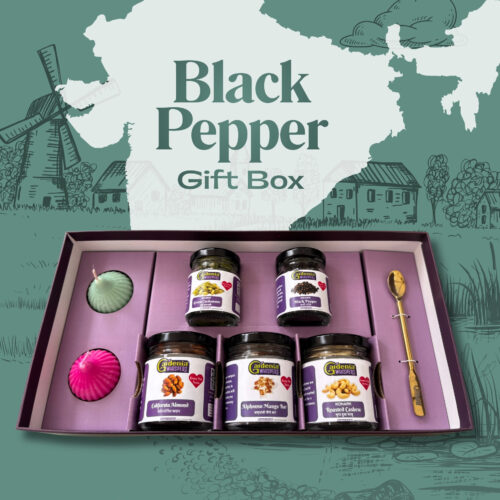
This is also why our black pepper gift box makes for a genuinely meaningful gift – it represents the full chain of care from farm to jar, not a commodity sourced for appearance.
How to Read the Black Pepper Rate Today Without Being Misled
The next time you are evaluating black pepper rates today, ask these five questions before making a purchase:
Where did it come from? The origin matters enormously. Being told it is “Indian black pepper” is not sufficient – India grows pepper across multiple regions with very different quality profiles.
What is its piperine content? Any quality brand will know this number. Generic brands will not. Piperine content is the most direct measure of pepper potency and health value.
How was it dried? Sun-dried and machine-dried are not equivalent. The drying method determines how much of the essential oil profile survives into your kitchen.
Can it be traced back to its source? Can the brand tell you which farm or farming community grew it? If not, it is a blend – and blends protect no one except the middleman.
Is the price too good to be true? If premium Wayanad pepper has a known wholesale benchmark and the retail price you are seeing is dramatically below it, something in the distribution chain was compromised – and that compromise was the quality of your pepper.
Black pepper prices in India vary significantly across farm gate, wholesale, and retail levels – and each level signals something about the quality of the pepper.
Wayanad pepper is priced higher because the region’s geography and traditional farming practices produce superior piperine content and flavour.
Farm gate price is almost always significantly lower than the wholesale pepper price – the gap is filled by intermediary margins, not quality improvements.
The cheapest pepper in the market almost always indicates blended sourcing, premature harvesting, or machine-drying – all of which reduce the pepper’s potency. Read more on how to identify pure spices to protect yourself.
Kali mirch price in bulk trade is a measure of supply chain efficiency, not pepper quality.
Three features that justify a higher price are natural sun-drying, selective hand-harvesting, and verified single-origin sourcing.
Transparent spice pricing is not a gimmick – it is a commitment to explaining the true cost and origin of every product. Explore our single-origin trial packto experience the difference directly.
Conclusion
The next time you consider black pepper rate today, remember the following things before you buy:
Where did it come from? This information is critical and not something you can determine by seeing the label “Indian black pepper.”
What is its piperine content? All good brands know this. Generic ones do not.
How was it dried? There is a meaningful difference between sun-drying and machine-drying – in flavour, potency, and shelf life.
Does it have traceability? Can the company trace it back to the source farm or farming community?
Is the price too good to be true? If the retail price sits well below the known wholesale benchmark for premium Wayanad pepper, something in the distribution chain was compromised – and that compromise was the quality of your pepper.
Frequently Asked Questions About Black Pepper Price & Quality
What is the black pepper price today in India?
Black pepper prices vary by region, quality, and supply chain level. Single-origin Wayanad black pepper typically costs more than blended commodity pepper because of its superior piperine content, traceable origin, and traditional sun-drying process.
Why is Wayanad pepper more expensive than regular black pepper?
Wayanad pepper is grown at high altitude in laterite soils, hand-harvested at full ripeness, and naturally sun-dried. This preserves higher piperine levels, a richer aroma, and a more complex flavour profile than regular blended pepper produced under industrial conditions.
What is piperine and why does it matter?
Piperine is the natural alkaloid compound that gives black pepper its characteristic heat and pungency. Beyond flavour, it supports nutrient absorption, stimulates digestive enzyme production, and is the primary measure of pepper's potency and overall quality. Higher piperine content means more effective pepper per gram consumed.
What is farm gate price in the context of black pepper?
Farm gate price is the amount a farmer receives for their pepper immediately after harvest, before it enters the wholesale and retail distribution chain. It is the starting price in the supply chain — and usually the lowest. The wider the gap between farm gate and retail price, the more intermediaries have been involved, and the greater the risk of blending and quality dilution along the way.
How can I tell if black pepper is high quality?
Look for pepper with a verified single origin from a named growing region, clear information on piperine content, sun-dried processing, and clean uniform peppercorns with no stems or foreign matter. A brand that can trace its pepper to a specific farm or farming community is always a stronger indicator of quality than one that cannot. Read our guide on how to identify pure spices at home for practical tests you can run yourself.
Is wholesale pepper cheaper because it is lower quality?
Not always — but frequently. Wholesale pepper is typically blended from multiple growing origins, which normalises visual appearance but makes quality inconsistent and origin unverifiable. When retail prices sit at or below the wholesale benchmark for premium single-origin pepper, the product is almost certainly a commodity blend with a lower quality ceiling.
What is the difference between sun-dried and machine-dried pepper?
Sun-drying pepper over several days allows the peppercorn to dehydrate slowly, preserving its full essential oil profile, piperine content, and aromatic compounds. Machine-drying achieves the same moisture reduction in hours, but at temperatures that rapidly degrade volatile oils. The result is a visually similar product that performs significantly worse in flavour, aroma, and potency.
Why does single-origin pepper cost more than blended pepper?
Single-origin pepper is sourced in smaller quantities from a named farm or growing community, verified for quality before dispatch, and sold without dilution. This reduces economies of scale and raises per-unit cost. Blended pepper allows buyers to average costs across many sources, but the quality ceiling is always set by the lowest-quality component in the blend.
Where can I buy authentic single-origin black pepper online?
Gardenia Whispers sources and sells Indian black pepper directly from single-origin farms, without industrial blending or quality dilution. You can also try our single-origin trial pack to experience the difference before committing to a full quantity.