Jeera Rice Recipe: How to Make Perfect, Fluffy Rice Every Time
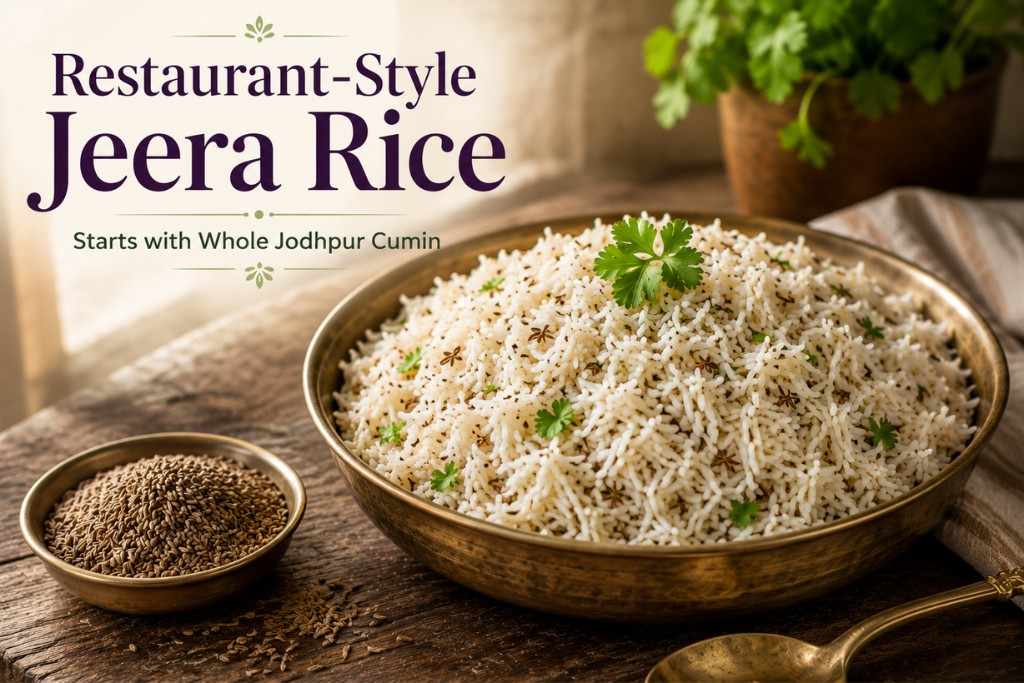
Getting a restaurant-quality plate of rice at home is harder than it looks. Most home cooks end up with grains that stick together, break when fluffed, or fall short of that rich, toasted aroma you get in professional kitchens. The good news: you don’t need fancy equipment to fix this. You need good rice, good technique, and good cumin.
This jeera rice recipe walks through exactly how to get there, with real measurements instead of vague ratios.
Why Sabut Jeera Rice Starts With the Right Cumin
Indian tempering gets its depth of flavor from a simple bit of kitchen chemistry: whole spices release their aromatic oils as heat breaks down their outer cell structure, which is why a quick sizzle in hot fat unlocks so much more flavor than spice that’s already ground and sitting on a shelf.
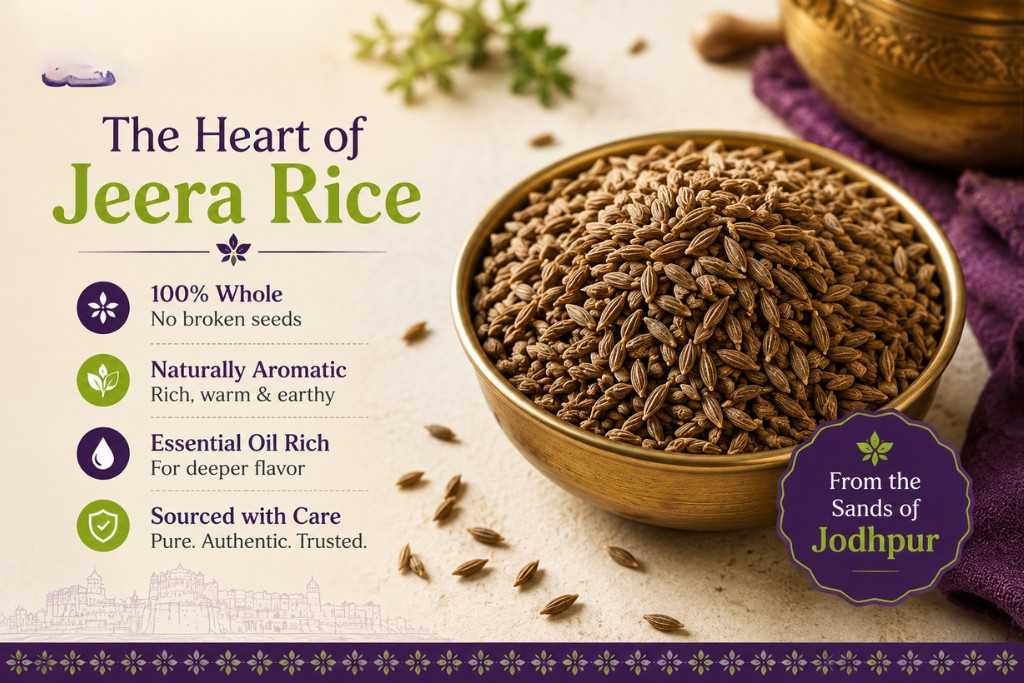
Cheap, over-processed cumin dries out and turns bitter in a hot pan before it has a chance to release its flavor, largely because it’s often lost much of its essential oil content by the time it reaches a supermarket shelf. Whole, oil-rich sabut jeera rice grains work differently: they hold onto their aromatic oils until the moment they hit warm fat, which is when a proper whole cumin tadka actually blooms and gives off that smoky, nutty depth ground powder can’t replicate.
Cumin’s characteristic nutty, slightly smoky flavor comes from natural aromatic compounds (cuminaldehyde, among others) that are best preserved in whole seeds and released gradually with gentle heat, rather than blasted out by high heat, which just burns them.
What whole cumin gives you that ground cumin doesn’t
Flavor stays locked in until you temper it, instead of fading on the shelf
Texture contrast: a whole cumin tadka gives you a little crunch against soft, fluffy rice
Better visual finish: whole seeds look more polished on a plate than scattered powder
Naturally easy on digestion, which is one reason jeera rice for kids’ lunchboxes has stayed a household staple for generations (more on this in our guide to the health benefits of Jodhpur cumin/sabut jeera)
Step-by-Step Execution: How to Make Perfect Jeera Rice
Ingredients (serves 3-4):
1 cup aged long-grain Basmati rice
2 cups water (for cooking) + water for rinsing/soaking
Rinse and soak the rice. Rinse the Basmati under running water until it runs clear. This removes surface starch, which is the main reason home-cooked rice turns sticky. Soak for 20-30 minutes, then drain completely.
Temper the jeera in ghee. Warm 2 tbsp ghee in a heavy-bottomed pan over medium-low heat. Add the whole cumin seeds and let them crackle gently for about 30 seconds, until lightly golden. This is the step that makes or breaks an aromatic jeera rice. Too high a heat and the seeds scorch instead of blooming.
Toast the rice briefly. Add the drained rice and stir gently for 1-2 minutes to coat each grain in ghee. This light toasting helps the grains hold their shape during cooking.
Boil and simmer. Add 2 cups hot water and salt, cover with a tight lid, and cook on low heat for about 12 minutes, or until the water is absorbed.
Rest, then fluff. Turn off the heat and let the rice sit, covered, for 10 minutes before opening the lid. Fluff gently with a fork, starting from the edges, so the grains separate without breaking.
Restaurant Style Jeera Rice Tips for Perfectly Non-Sticky Rice
If your rice turns out mushy, the usual culprits are too much water or stirring too aggressively while it cooks. A few things that consistently help:
Stick to a true 1 cup rice : 2 cups water ratio for the cooking stage (after soaking and draining).
Use a light folding motion with a fork or thin spatula, never a vigorous stir.
Let the rice rest untouched, off the heat, before fluffing. This lets the grains firm up and separate cleanly instead of clumping.
Get these three details right and you’ve solved 90% of what makes an easy Indian rice recipe go wrong at home.
Flavor and Texture Pairing Guide
Ingredient
Role in the Dish
Best Paired With
Pure cow ghee
Rich, rounded mouthfeel; carries spice aroma
Dal Makhani, smoky Dhaba-style Tadka Dal
Fresh cilantro
Bright, herbaceous contrast to smoky cumin
Paneer Tikka Masala, Malai Kofta
Slivered cashews
Buttery crunch for special occasions
Shahi Paneer, vegetable Korma
A Quick Jeera Pulao Variation
For a slightly heartier jeera pulao recipe, add a bay leaf, 2 cloves, and a small cinnamon stick along with the cumin in step 2, and stir in a handful of thinly sliced onions until golden before adding the rice. Everything else in the method stays the same.
Key Takeaways
Start with aged Basmati: older grains hold their shape and separate more easily than fresher rice.
Use whole cumin, not powder: it’s the foundation of both flavor and aroma in this dish.
Medium-low heat for tempering: you want the seeds to bloom, not blacken.
Handle the rice gently: fold, don’t stir, and always rest before fluffing.
Keep the ratio simple: 1 cup rice to 2 cups water at the cooking stage is the most reliable baseline.
Once you’ve got the technique down, this dish becomes a fast, dependable base for almost any Indian curry, and simple enough to make on a weeknight without feeling like a shortcut.
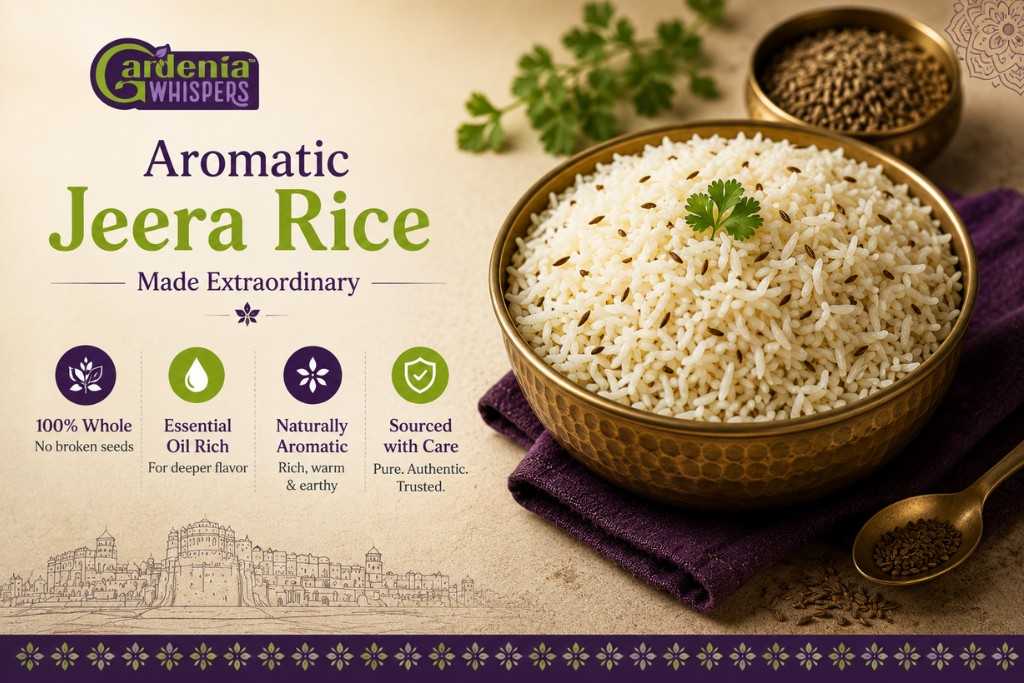
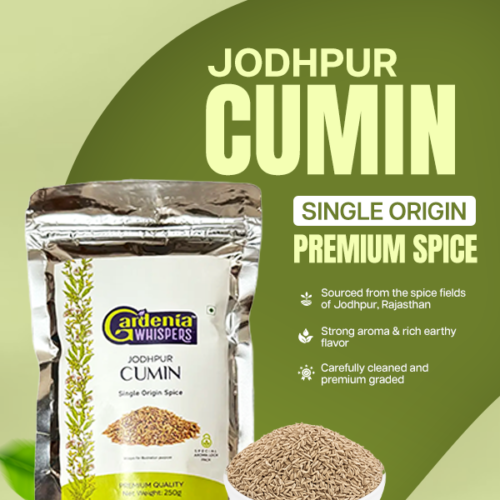
At Gardenia Whispers, we source whole Jodhpur cumin and other traceable, farm-fresh spices for cooks who care about where their ingredients come from. Read more about how we source our spices, or if you’d like your pantry stocked with the same whole sabut jeera rice grains used in this recipe, browse our shop.
Jeera Rice: Frequently Asked Questions
Why use whole cumin instead of ground cumin in jeera rice?
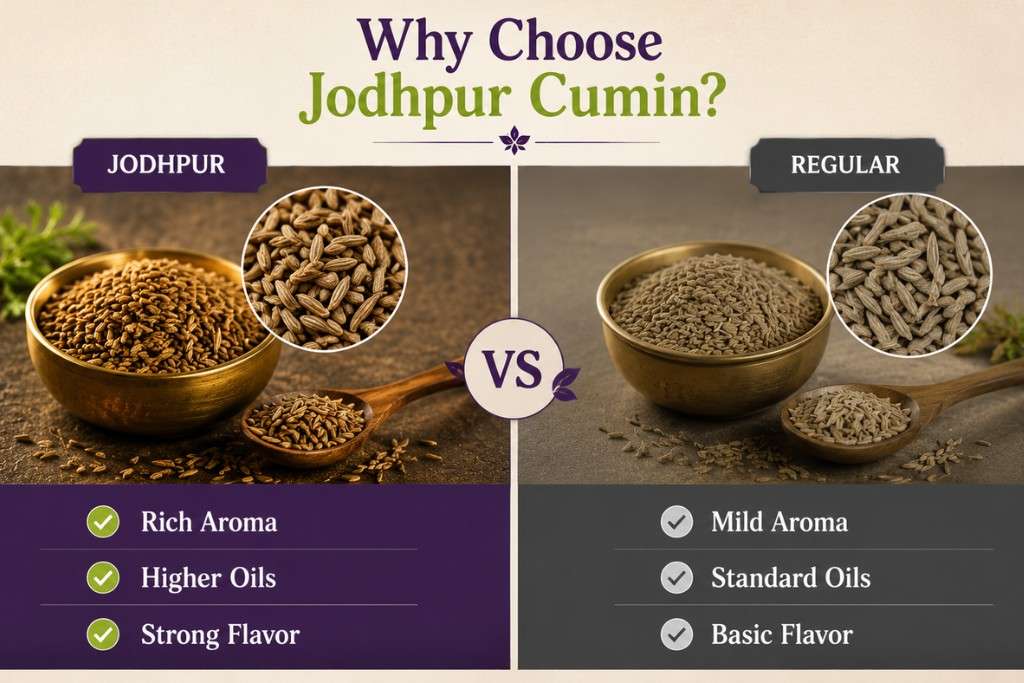
Whole cumin seeds hold onto their aromatic oils until they hit warm ghee, which is when a proper tempering actually blooms. Ground cumin loses much of that essential oil well before it reaches the pan, so it can't produce the same depth of flavour. Whole Jodhpur cumin in particular carries a naturally high oil content, which is why it's the preferred choice for tempering. See our comparison of Jodhpur cumin vs. regular cumin for more detail.
What is the correct rice to water ratio for jeera rice?
Use a true 1 cup rice to 2 cups water ratio at the cooking stage, after the rice has already been soaked and drained. Getting this ratio right, rather than eyeballing it, is one of the most reliable ways to avoid mushy or sticky rice.
Why do you rest the rice before fluffing it?
Resting the rice, covered and off the heat, for about 10 minutes lets the grains firm up and settle before they're disturbed. Fluffing too early, or stirring vigorously instead of folding gently, is what causes grains to break and clump together.
What's the difference between this jeera rice recipe and a jeera pulao recipe?
This jeera rice recipe uses just whole cumin, ghee, and salt. For a jeera pulao recipe, add a bay leaf, two cloves, and a small cinnamon stick along with the cumin, and stir in sliced onions until golden before adding the rice. The rest of the method stays exactly the same.
What should I serve with jeera rice?
Jeera rice pairs especially well with rich, heavier gravies such as dal makhani or Dhaba-style tadka dal, tangy paneer tikka masala or malai kofta, and creamy vegetable korma or shahi paneer. Its light cumin flavour balances heavier curries without competing with them.
Is jeera rice a good option for kids' lunchboxes?
Yes. Jeera rice is easy to digest, and whole cumin has natural carminative properties traditionally associated with supporting digestion, which is one reason jeera rice has stayed a common choice for kids' lunchboxes across generations.