Cinnamon in Hindi is दालचीनी (dalchini). That is the word you will find in every Indian recipe, every Ayurvedic text, and every grandmother’s kitchen vocabulary. But knowing the name is only the beginning. The more important question is whether the stick of dalchini in your kitchen is actually what it claims to be.
Most cinnamon sold in India is not cinnamon. It is cassia, a different species of bark that looks similar, smells similar, and is priced far below genuine Ceylon cinnamon. The difference between the two is not a matter of marketing preference. It is a matter of chemistry, specifically coumarin content, and it has health implications for anyone using dalchini regularly in cooking or as part of a wellness routine.
This guide covers what dalchini actually is, where real Ceylon cinnamon comes from, how to tell असली (asli) from नकली (nakli) at home, and what your kitchen history already knows about identifying the genuine thing.
दालचीनी क्या होता है? What Is Dalchini?
Dalchini is the dried inner bark of trees belonging to the Cinnamomum genus. The outer bark of the tree is stripped away first, and the thin, tender inner bark beneath it is carefully peeled off in long strips. As these strips dry, they curl naturally into rolls or quills. What you see in the stick form is that dried, rolled inner bark.
The primary flavour compound in dalchini is cinnamaldehyde, which makes up 55 to 90 percent of the essential oil in genuine Ceylon cinnamon. Cinnamaldehyde is responsible for the warm, sweet, slightly spicy aroma that makes cinnamon recognisable the moment you open a jar. It is also the compound responsible for the digestive and anti-inflammatory properties attributed to dalchini in Ayurvedic tradition.
But not all dalchini is the same species. Ceylon cinnamon, Cinnamomum verum, is true cinnamon. Cassia, Cinnamomum cassia or Cinnamomum aromaticum, is a different tree entirely, with a harder bark, a sharper flavour, and most importantly, a significantly higher coumarin content. Coumarin at low levels is harmless. At the levels present in cassia, consumed daily over months and years, it is associated with liver toxicity. Ceylon cinnamon contains approximately 0.004 percent coumarin. Cassia contains between 1 and 12 percent. That is a 250 to 3,000 times difference.
How Your Grandmother Identified Real Cinnamon
She did not have an iodine test kit. She did not have a laboratory report. She had her hands, her nose, and decades of knowing what real spices felt like.
Picture a kitchen in the 1970s or 1980s, before packaged spice brands became the norm. A woman standing at a wooden counter, opening a cloth packet she had bought from the spice merchant at the weekly bazaar. The merchant knew her by name. She knew his supply by reputation. But she still checked.
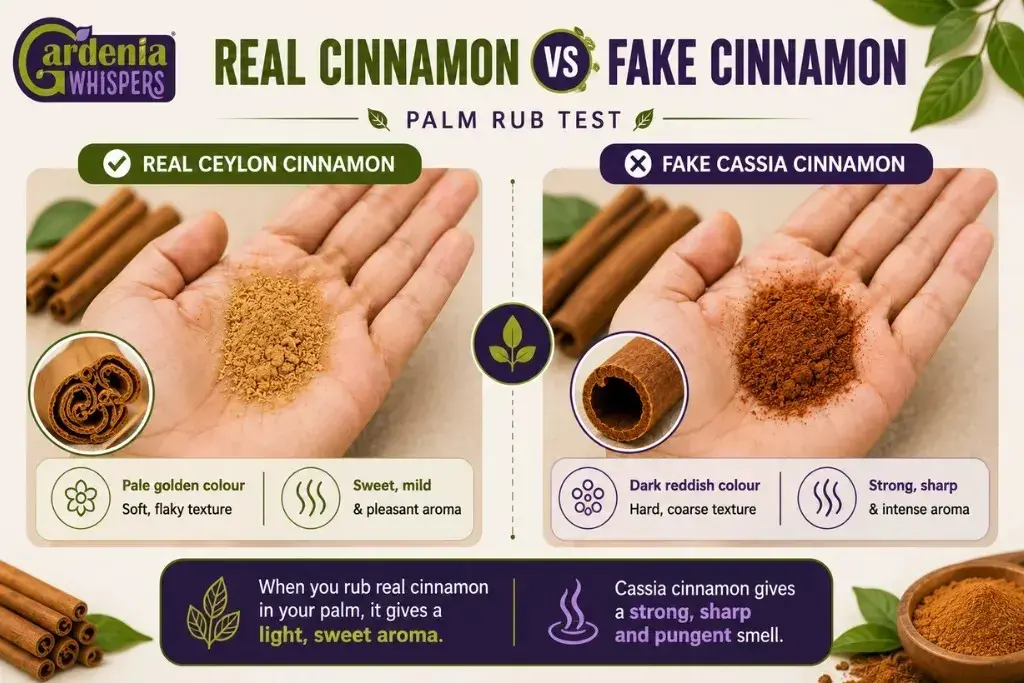
The first thing she did was break the stick. She pressed it between her thumb and index finger, gently but deliberately. If it crumbled into thin, paper-like layers, she nodded. That was असली दालचीनी (asli dalchini). If it resisted, if it held firm like a piece of wood and required real force to snap, she set it aside. That was something else.
The second thing she did was smell it before it touched heat. Not after putting it in hot oil, when everything smells good and the difference is harder to catch. She held it under her nose at room temperature. Genuine Ceylon cinnamon has a warm, faintly sweet aroma even before it is heated. It does not overpower. It does not smell medicinal or sharp. Cassia, by contrast, has a more aggressive, almost harsh scent even cold. She described it as “kharaa” (rough) versus “meetha” (sweet).
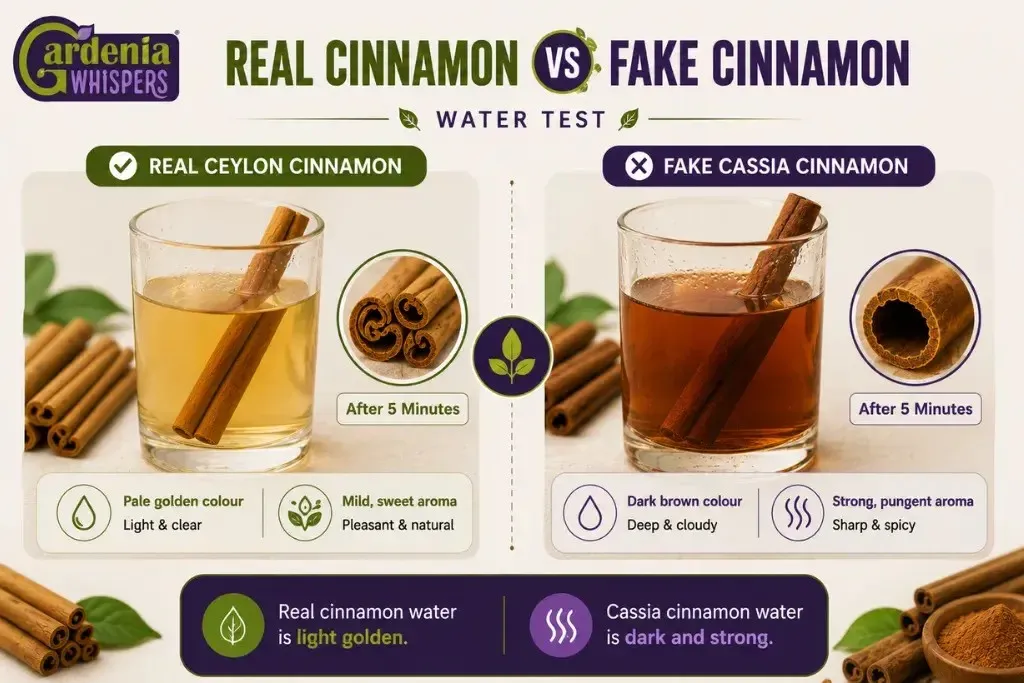
The third thing she did was drop a small piece into warm water and watch the colour of the infusion. Genuine Ceylon cinnamon produces a pale golden water with a soft, clean smell. Cassia produces a darker, more reddish-brown infusion with a stronger, more pungent note.
Three tests. No equipment. Less than two minutes. And she was right almost every time.
These are not folk remedies or superstition. They are sensory observations that map directly onto the chemistry. The brittleness of Ceylon cinnamon comes from its thin, multi-layered bark structure. The softness of the aroma comes from lower cinnamaldehyde concentration relative to cassia. The pale water colour comes from lower coumarin and tannin content. Your grandmother was doing chemistry without knowing it.
असली दालचीनी vs नकली: The Visual Comparison
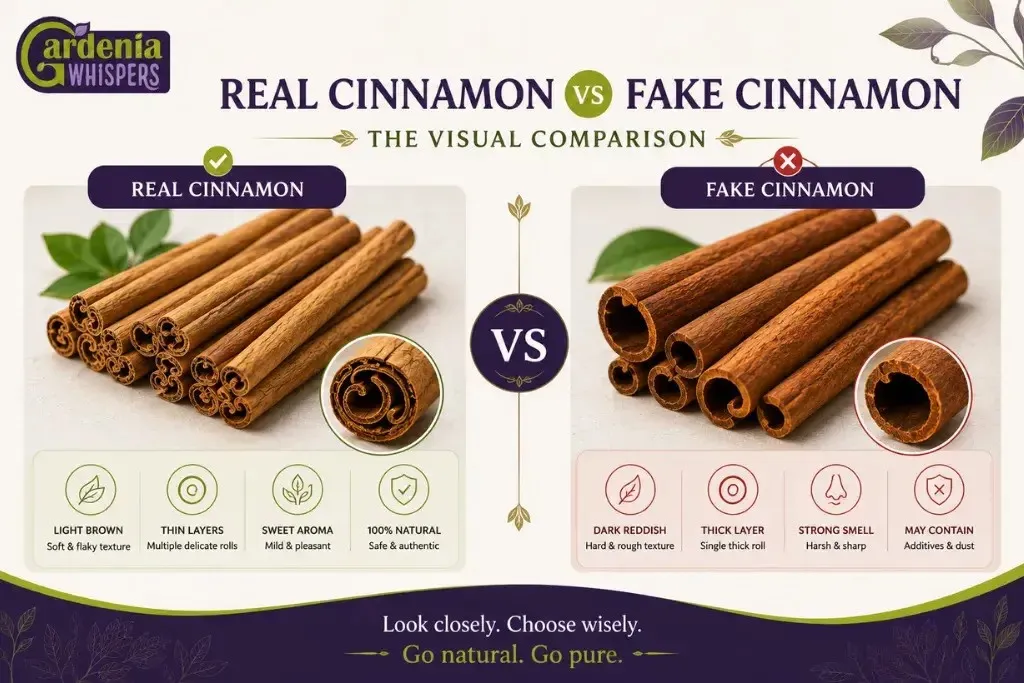
The visual difference between असली and नकली cinnamon comes down to one thing you can see immediately by looking at the cut end of the stick.
Ceylon cinnamon has multiple thin, papery layers rolled tightly together, like a hand-rolled paper cigarette when you look at the cross-section. You can count the layers. There are typically 8 to 14 of them, each thin enough to peel individually. The overall texture is light and slightly rough.
Cassia has a single thick, hard scroll. It is one layer, rolled into a tube. The walls are significantly thicker. The stick is heavier and denser than Ceylon cinnamon of the same external diameter. When you try to break it with your fingers, it holds firm.
This structural difference is not cosmetic. It reflects the fundamental botanical difference between the two species. Ceylon cinnamon comes from a tree with thin inner bark that rolls into multiple delicate layers when dried. Cassia comes from a tree with thick, hard bark that forms a single dense scroll.
The Sri Lanka Origin Story: असली दालचीनी का घर
Ceylon cinnamon (Cinnamomum verum) comes from Sri Lanka, specifically from the Western Province districts of Galle, Matara, Kalutara, and Colombo. Sri Lanka, known as Ceylon until 1972, has been growing true cinnamon for over 500 years. The island’s warm, humid, low-altitude coastal climate, with well-drained sandy soils and consistent rainfall, produces the conditions under which Cinnamomum verum develops its characteristic thin bark and low coumarin profile.
श्रीलंका में दालचीनी की खेती कैसे होती है? (How is cinnamon grown in Sri Lanka?)
The trees are grown in managed plots and harvested every two years. Skilled harvesters, called cinnamon peelers or “chalias,” use a special curved knife to score the outer bark and remove it in strips without damaging the tree. The inner bark beneath is then carefully peeled off in long pieces that curl naturally as they dry. Each stick is hand-rolled by pressing several of these bark strips together to form the tight, multi-layered quill that characterises genuine Ceylon cinnamon.
यह प्रक्रिया पूरी तरह हाथ से होती है। (This process is done entirely by hand.) The hand-rolling process cannot be replicated by machine without damaging the thin, fragile bark. This is part of why Ceylon cinnamon is more expensive than cassia. It is more labour-intensive to harvest and process. It also produces a structurally different product: the tight, multi-layered quill rather than the single-scroll tube of cassia.
Sri Lanka’s cinnamon holds Protected Designation of Origin (PDO) status in the European Union, which is the strongest form of geographical protection for agricultural products. Only cinnamon produced in Sri Lanka from the Cinnamomum verum species can be sold as Ceylon cinnamon in EU markets. India does not yet have an equivalent domestic protection, which is why cassia is freely sold under the dalchini label in Indian markets without disclosure of species.
दालचीनी के फायदे: Health Benefits of Genuine Dalchini
The health benefits attributed to dalchini in Ayurvedic tradition and in modern food science apply primarily to Ceylon cinnamon with its high cinnamaldehyde content and very low coumarin level. Using cassia as a daily supplement or in therapeutic doses carries the coumarin risk that makes long-term consumption a concern.
Blood sugar regulation: Cinnamaldehyde and other compounds in genuine cinnamon have been studied for their role in improving insulin sensitivity. Several clinical studies have found a positive association between regular Ceylon cinnamon consumption and improved post-meal blood glucose response. This effect is associated with Ceylon cinnamon specifically, not with high-coumarin cassia.
Digestive support: Adding a small piece of genuine dalchini to warm water or chai supports digestive comfort, reduces bloating, and has a mild antimicrobial effect in the gut from cinnamaldehyde. This is one of the oldest uses of cinnamon in Indian household medicine.
Antioxidant density: Ceylon cinnamon carries a high concentration of polyphenols that act as antioxidants. The ORAC (Oxygen Radical Absorbance Capacity) value of genuine Ceylon cinnamon is among the highest of any common kitchen spice.
What cassia does not offer: Cassia carries the same cinnamaldehyde-driven flavour but at the cost of coumarin exposure. The European Food Safety Authority has established a Tolerable Daily Intake (TDI) for coumarin of 0.1 mg per kilogram of body weight per day. A person weighing 60 kg consuming 1 gram of cassia per day is at or near this limit depending on the batch’s coumarin concentration. With Ceylon cinnamon, the same amount delivers approximately 3,000 times less coumarin.
दालचीनी कैसे पहचानें: How to Identify Genuine Dalchini at Home
Break test (सबसे आसान तरीका): Press the stick between your thumb and index finger. Genuine Ceylon cinnamon breaks easily and crumbles into thin, papery layers. Cassia requires significant force and snaps or holds firm. If your cinnamon does not crumble under gentle pressure, it is cassia.
Layer count: Look at the cut end of the stick. Count the visible layers. Genuine Ceylon cinnamon has 8 to 14 thin layers. Cassia has one thick layer. This is the most definitive visual check.
Scent at room temperature: Hold the stick under your nose without breaking it. Genuine Ceylon dalchini releases a soft, warm, faintly sweet aroma even at room temperature. Cassia’s aroma is sharper and more medicinal. The difference is subtle but detectable once you know what you are comparing.
Water infusion: Drop a small piece into warm water and leave for 5 minutes. Genuine Ceylon cinnamon produces a pale golden infusion with a clean, sweet smell. Cassia produces a darker, more brownish infusion with a stronger, more pungent note.
Iodine test for ground cinnamon: Dissolve a small amount in water and add two drops of iodine. Pure cinnamon shows little or no colour change. Starch adulterants turn deep blue or black immediately.
नकली दालचीनी कैसे पहचानें: A batch that resists breaking, has a single thick layer when cut, smells sharp and medicinal at room temperature, and produces a dark water infusion is almost certainly cassia, regardless of what the label says.
दालचीनी का उपयोग: How to Use Genuine Dalchini in Cooking
Genuine Ceylon cinnamon is more delicate than cassia and should be used accordingly. Its thinner bark releases its oils more readily into both fat and liquid.
In tempering (tadka): Add a small piece to hot oil at the start of a curry or biryani along with cardamom and cloves. It infuses the fat quickly. Use a smaller piece than you would cassia because the flavour is more concentrated per gram.
In chai and warm drinks: Add a small piece while brewing. Ceylon cinnamon gives a warm, sweet complexity that does not overpower the tea. It is also effective steeped in warm water alone as a morning drink.
In biryani and slow-cooked dishes: Drop a quill into the cooking liquid at the beginning. Remove before serving if preferred. The multiple thin layers release their flavour more gradually than cassia, giving a more integrated result.
In sweets: Ceylon cinnamon pairs particularly well with milk-based sweets like kheer, where its gentle sweetness complements the dairy without sharpness.
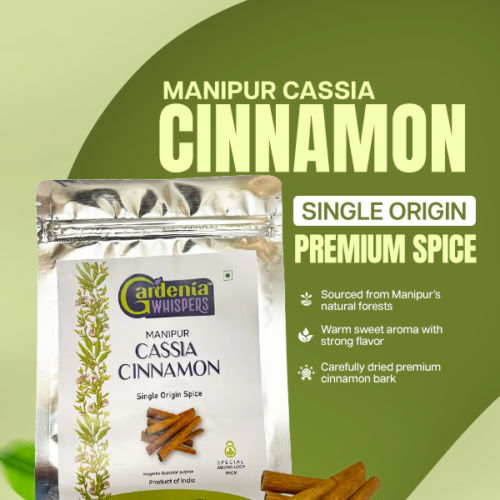
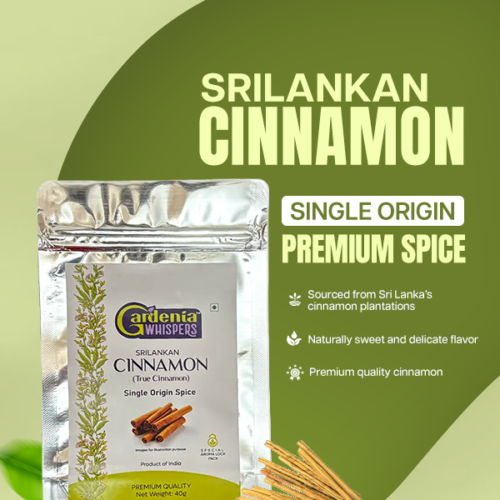
Gardenia Whispers carries two clearly labelled, species-disclosed cinnamon products. Our Sri Lankan Cinnamon (True Cinnamon) is genuine Cinnamomum verum sourced from Sri Lanka. Our Manipur Cassia Cinnamon is Cinnamomum tamala from Manipur’s forests, sold transparently as cassia. We do not blend or mislabel either product.
You can read more about how we source every product at our how we source page and our certifications page. For the full range of single-origin spices, visit our shop.

Manipur Cassia Cinnamon – Bold Himalayan Dalchini Bark
Price range: ₹115.00 through ₹205.00 incl. GSTClear50 g100 gSelect options This product has multiple variants. The options may be chosen on the product pageCeylon Dalchini Sticks – Authentic Sri Lankan Cinnamon
Price range: ₹300.00 through ₹575.00 incl. GSTClear20 g40 gSelect options This product has multiple variants. The options may be chosen on the product page