A daily, healthy sprinkle of cinnamon powder might be introducing micro-doses of liver-toxic compounds into your breakfast without you even realizing it. Millions of kitchens all over the world consider this aromatic spice as a healthy superfood and celebrate it for its metabolic and antioxidant properties. Yet, the global spice supply chain has a major problem at its core that has yet to be addressed. A large portion of the spice that is marketed as high-quality is, in fact, a cheap bark substitute that can cause serious health problems over time.
Knowledge of botanical and the substantial differences between different tree barks is only the first step in ensuring that your purchasing decisions are made with your health in mind. When someone wants to buy cinnamon the just the closest jar on the shelf at the supermarket. This way, the families have made themselves very vulnerable to the widespread regional mislabeling of products without even realizing it.
The scale of the problem is staggering. According to estimates from spice industry trade bodies and FSSAI surveillance reports, approximately 80% of the cinnamon sold in Indian retail markets is actually Cassia bark mislabelled as “cinnamon” or “dalchini.”
Most consumers never learn this because both varieties are legally sold under the same generic name, and there is no mandatory requirement for sellers to distinguish between the two species on the label. This means that the vast majority of Indian households consuming daily dalchini for health purposes are unknowingly ingesting high-coumarin Cassia, believing it to be the safe, therapeutic spice that clinical studies actually tested.
The brief box below gives clear guidelines on the main features helpful in distinguishing high-quality spices:
The Zero-Click Buyer’s Summary: Real health protection needs knowing the big difference between Ceylon cinnamon and Cassia. Usually, cheap dalchini powder is just the thick, hard Cassia bark with a lot of coumarin in cinnamon, whereas real Sri Lankan cinnamon is a sweet, low-toxic choice. Smart buyers go for the real cinnamon India sources and do the quick cinnamon curl test to detect cheap cinnamon adulteration India alternatives before buying.
Botanical Showdown: Ceylon Cinnamon vs. Cassia
While looking for high-quality cinnamon powder, buyers are misled by the mix of unsubstantiated claims in the market. On a global scale, the spice trade is split into two completely different botanical types. Besides featuring drastically varied chemical compositions, these two types also result in different production costs and health implications over time.
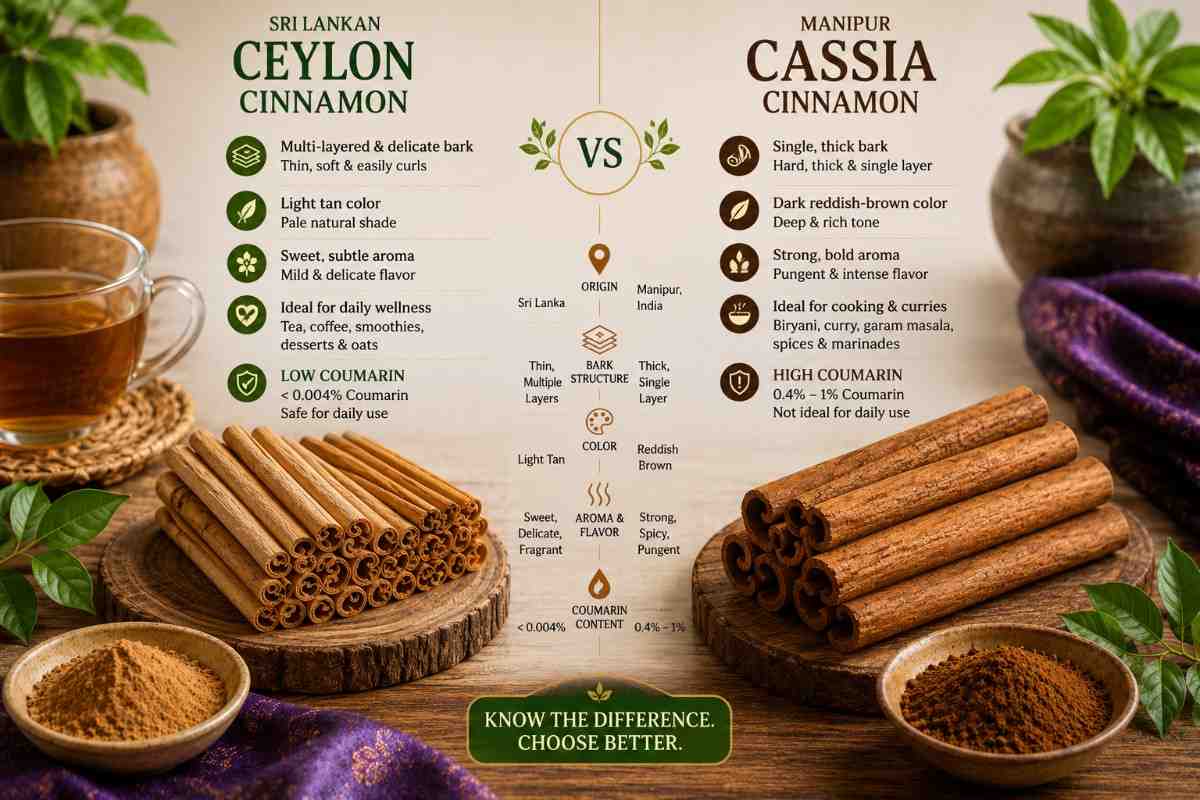
High-Toxin Profile of Cassia: Most of the cassia powder (dalchini) available in supermarkets is derived from Cinnamomum cassia. The bark of this variety is rough, thick, and single-layered. Besides, it contains a high concentration of coumarin, a naturally occurring organic compound. Gardenia Whispers sources its Manipur Cassia Cinnamon from verified farms in Northeast India and clearly labels it as Cassia on the product page, so you always know exactly what you are buying.
Hepatic Risks of Coumarin: From clinical medical studies, it has been seen that continuous intake of coumarin in cinnamon can mean liver damage and inflammation when it comes to highly sensitive individuals.
The European Food Safety Authority (EFSA) established a Tolerable Daily Intake (TDI) for coumarin at 0.1 mg per kilogram of body weight per day. For a 70 kg adult, that translates to just 7 mg daily. A single teaspoon (approximately 2.6 grams) of standard Cassia powder contains roughly 7 to 18 mg of coumarin, meaning one teaspoon can already exceed the safe daily limit. An amount as small as a teaspoon of low-grade cassia powder can cause an adult to exceed the safe daily intake limits set by international health organizations.
True Purity of Sri Lankan Cinnamon: Sometimes termed by specialists as “true cinnamon,” the genuine Cinnamomum verum is harvested with great care as thin, multi-layered inner barks, which are exclusively known as Sri Lankan cinnamon.
Alternative with Minimal Toxins: When comparing ceylon cinnamon vs cassia, arguably real Ceylon has less than 0.004% coumarin. This minute quantity makes it hundreds of times safer for daily wellness consumption in comparison with its industrial counterpart.
Structural Mechanics of Cinnamon Powder Uses in Cooking
Different bark types not only impact your body’s metrics but also alter the aroma of cinnamon powder uses in cooking. Each one reacts differently to heat and that’s why changes the flavor composition of the dishes.
Commercial Dalchini’s Strong Punch: Cassia-based dalchini powder is known for its sharp, spicy and deeply pungent flavor mainly because it’s richly packed with cinnamaldehyde oils. This quite overbearing profile of the spice also makes it a perfect match for heavy and slow-cooked savory dishes. If this is the flavor profile you prefer, Gardenia Whispers offers clearly labelled Manipur Cassia Cinnamon so you can use it knowingly rather than being misled by generic “dalchini” packaging.
True Ceylon’s Soft Charm: Genuine Sri Lankan cinnamon offers a velvety, sweet, and intricate flavor laden with subtle citrus undertones. This mild aroma allows it to be used in baking and smoothies without the risk of it dominating other flavors.
Guide to Consuming Warm Drinks Daily: Adding a bit of fine cinnamon powder to your hot tea or black coffee allows you to extract the beneficial water-soluble polyphenols that among other effects contribute to your daily metabolism. This works especially well as a morning ritual alongside other wellness drinks like jeera water for weight loss.
Baking Effects of Premium Ingredients: Using top-grade cinnamon powder in cooking means that you allow the spice to be distributed uniformly in the batter and at the same time avoid that rough texture of the wood that may be left behind.
How to Identify Real Cinnamon: Essential Purity Tests
Since raw spices can be easily prepared as uniform powders, the adulteration of cheap cinnamon in local supply chains is a common practice in India. To increase their product volume, dishonest suppliers mix in pulverized wood dust, wild barks, or even cassia cores that have been stripped of their natural oils.
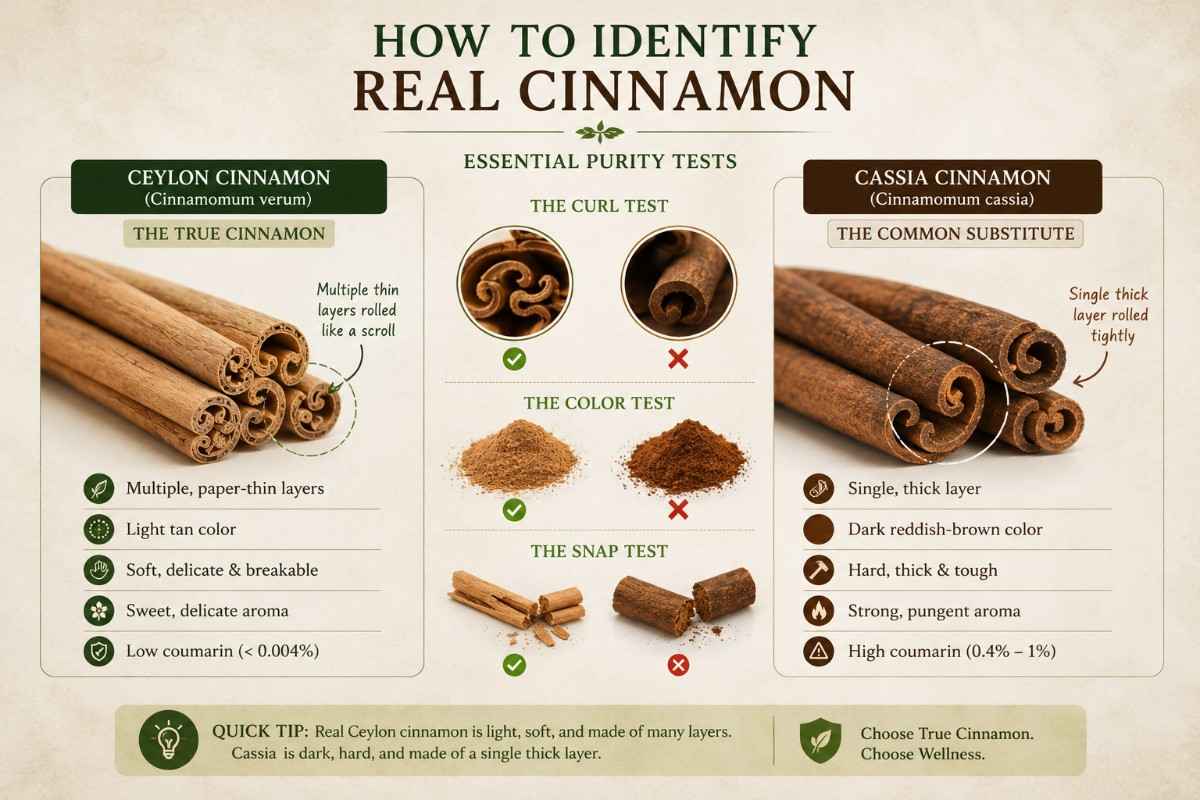
Classic Cinnamon Curl Test: If you are buying whole spice sticks, examine the internal layering of the cinnamon closely. True Ceylon consists of multiple thin, paper-like layers that are rolled tightly together similar to a cigar, whereas Cassia displays just one thick, hollow curve that does not break easily.
Iodine Starch Detection Test: You can very quickly perform a cinnamon adulteration India test yourself by mixing a small amount of powder with warm water and then adding a few drops of liquid iodine. If a deep blue color appears in the mixture, this shows the spice has been adulterated with cheap starch or flour fillers.
Visual and Color Inspection: Genuine, high-quality real cinnamon India presents a soft, pale tan color. However, low-grade industrial Cassia has a rough dark reddish-brown tint.
Texture and Breakage Check: Genuine Sri Lankan cinnamon quills are soft, brittle, and can be ground into powder quite easily even by using a simple kitchen mortar, but Cassia pieces are extremely hard and require heavy industrial mills for their crushing.
By simply adding a pure, clean cinnamon powder to your daily diet, you can enjoy lots of potent health benefits that have been supported by scientific research.
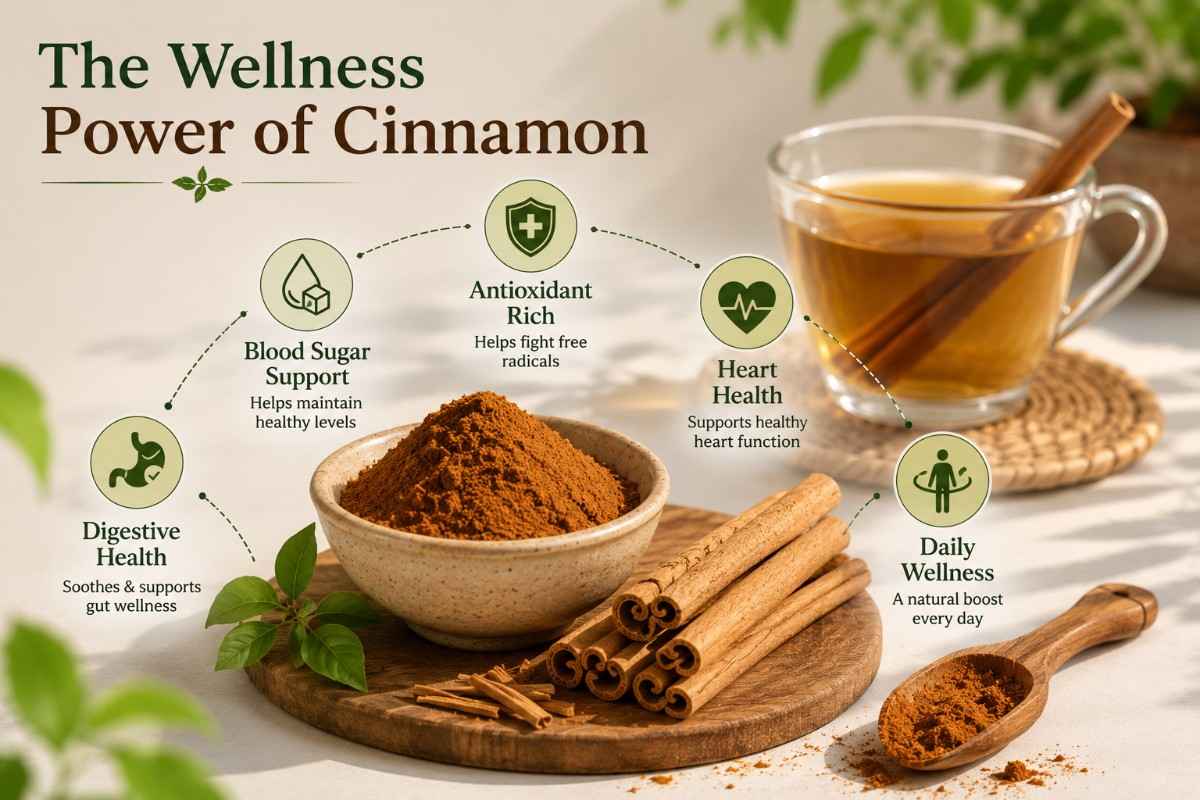
Regulating blood glucose levels: Consistent consumption of real cinnamon improves cellular insulin sensitivity, which in turn, allows the body to cope with post-meal blood sugar rises more effectively.
Abundant in cellular antioxidants: This spice holds tons of polyphenols, which are the body’s main weapon to fight free radicals and so reduce the overall inflammation in the body.
Helping Heart Wellbeing: Research shows that one of the cinnamon benefits is that it can help support a healthy heart by regulating the body’s fat levels and enhancing blood flow.
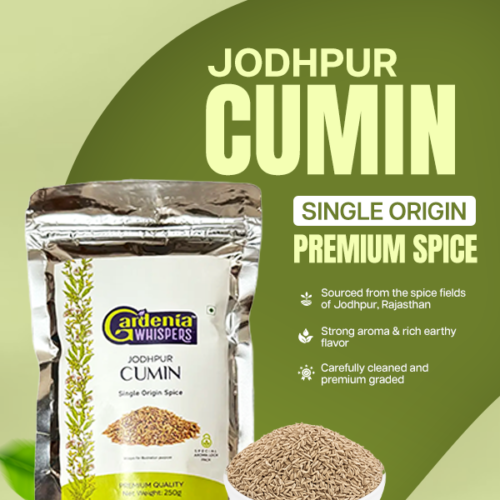
Natural Microbial Defense: The inherent essential oils present in cinnamon bark carry innate defense mechanisms that can help maintain your gut microbiome balance and health. Pairing cinnamon with digestive spices like Jodhpur cumin in your daily cooking creates a powerful combination for both gut protection and flavor.
Smart Buyer’s Spice Comparison Matrix
To help you choose the right product for your kitchen, use this clear comparison of the two cinnamon types available in the market:
Analytical Attribute
Authentic Ceylon Cinnamon
Commercial Cassia Bark
Botanical Designation
Cinnamomum verum (True Spice)
Cinnamomum cassia (Common Substitute)
Primary Sourcing Origin
Pristine coastal plantations of Sri Lanka
Industrial agricultural zones in China, Indonesia, and Northeast India
Coumarin Concentration
Ultra-low trace levels (less than 0.004%)
High concentrations (ranging from 0.4% to 0.8%, up to 1% in some batches)
Why Gardenia Whispers labels both types separately: Unlike most Indian spice brands that sell Cassia under the generic label “dalchini” or “cinnamon,” Gardenia Whispers is one of the few brands that clearly identifies each type by its botanical species and geographic origin on the product page. If you want daily wellness use with minimal coumarin risk, choose our Sri Lankan Cinnamon. If you want the bold, pungent flavor for heavy curries and biryanis, choose our Manipur Cassia Cinnamon. Either way, you know exactly what is going into your food.
Key Takeaways
Put Safety First: Changing the plant you get your spice from is the best way to ensure that you are not inadvertently exposing yourself to the high levels of a toxic substance coumarin that are present in cinnamon.
Test at Home Quickly: Use the simple cinnamon curl test on whole sticks to protect your kitchen from the common cinnamon adulteration India channels.
Coordinate Flavors With Your Dishes: Use the subtle Sri Lankan cinnamon variety for lighter desserts while you can keep the stronger dalchini powder types for slow-cooked heavy savory dishes.
Check Spice Color Differences: Stay away from dark, reddish-brown selections and instead seek the soft, pale tan shades indicative of a genuine, low-toxin crop.
Demand Lab Openness: Buy only from recognized and reliable sellers who are candid about the origin and species of their authentic cinnamon India stocks.
Conclusion: Absolute Supply Chain Clarity with Gardenia Whispers
Moving pictorially away from the anonymous, unlabelled jars at the supermarket is a good start if you plan to navigate the complex and changing global spice market. When it comes to protecting your family from the hidden toxins, it is not enough to just be confused with different kind of cinnamon. You should be able to pinpoint every spice, the exact origins, the botanical classification, and the purity of the spice that you are using. What kind of cinnamon is better between ceylon cinnamon vs cassia? This is the last thing that you should be figuring out based on the vague information on the packaging or the misleading marketing slogans.
At Gardenia Whispers, we are redefining consumer trust by providing honest and clearly labeled sourcing for our range of spices. We believe that aware consumers should be fully informed about the things they are ingesting; because of this, we completely oppose the industry practice of mixing or hiding under generic names cheap substitutes. Whether your particular health program calls for the extremely low coumarin level of genuine Sri Lankan cinnamon or the richly flavored culinary Cassia that has been carefully sourced from Manipur, we clearly indicate each type of cinnamon so you can shop without any doubt. Concentrating only on purity results that every batch of cinnamon powder that we make is capable of providing the finest flavor and the advantages of cinnamon to the highest degree while also ensuring not to affect your health in a negative manner.
With your help, we want to make your cupboard not only more fancy but also with spices which you can really rely on. Shop our complete range and discover what honest spice sourcing looks like, rooted in our journey through India and Sri Lanka’s finest growing regions.
Frequently Asked Questions
How to identify original cinnamon from fake or adulterated cinnamon?
There are four reliable tests you can do at home. First, the curl test: genuine Ceylon cinnamon sticks have multiple thin, papery layers rolled tightly like a cigar, while Cassia has one thick, hard bark with a single hollow scroll. Second, the colour test: real Ceylon is a soft, pale tan colour, while Cassia is dark reddish-brown. Third, the texture test: Ceylon quills are brittle and crumble easily between your fingers, while Cassia is extremely hard and difficult to break. Fourth, the iodine test for powder: mix a small amount with warm water and add a few drops of iodine — if it turns deep blue, the powder has been adulterated with starch or flour fillers.
Is dalchini and cinnamon the same thing?
In India, “dalchini” is used as a generic term for cinnamon, but it almost always refers to Cassia bark (Cinnamomum cassia), not true cinnamon (Cinnamomum verum). These are two botanically different species from different trees with very different chemical profiles. Cassia contains high levels of coumarin, a compound that can damage the liver with regular heavy use, while Ceylon cinnamon contains only trace amounts. Approximately 80% of the cinnamon sold in Indian retail markets is Cassia labelled generically as “dalchini” or “cinnamon” without any species distinction. Gardenia Whispers solves this by selling both types with clear labelling: Sri Lankan Cinnamon (True Cinnamon) and Manipur Cassia Cinnamon.
Which type of cinnamon is best for daily use?
Ceylon cinnamon (Cinnamomum verum) from Sri Lanka is the only type that is safe for daily long-term consumption. It contains less than 0.004% coumarin, which makes it hundreds of times safer than Cassia. If you are adding cinnamon to your morning tea, coffee, oatmeal, or smoothies every day for health benefits, always use Ceylon. Reserve Cassia for occasional use in heavy savory dishes like biryanis and curries where its bold, pungent flavour is needed.
Which cinnamon is the most healthy?
Ceylon cinnamon is considered the healthiest variety because it delivers all the metabolic and antioxidant benefits of cinnamon without the coumarin toxicity risk. Clinical studies on blood sugar regulation, cholesterol reduction, and antioxidant activity have predominantly used Ceylon cinnamon or standardised cinnamon extracts with controlled coumarin levels. When researchers report that cinnamon helps with diabetes or heart health, the benefits apply most safely to the Ceylon variety. Using high-coumarin Cassia daily to chase those same benefits can actually cause liver damage over time, which defeats the purpose entirely.
How much cinnamon should I use daily?
For Ceylon cinnamon, a daily intake of half a teaspoon to one teaspoon (approximately 1 to 2.6 grams) is widely considered safe and effective for general wellness benefits. This amount provides enough cinnamaldehyde and polyphenols to support blood sugar stability and antioxidant protection. For Cassia, even half a teaspoon can approach the European Food Safety Authority’s daily coumarin safety limit of 0.1 mg per kilogram of body weight. If you are using cinnamon specifically for blood sugar management, consult your physician for dosage guidance, especially if you are on diabetes medication.
Does cinnamon help with blood sugar and diabetes?
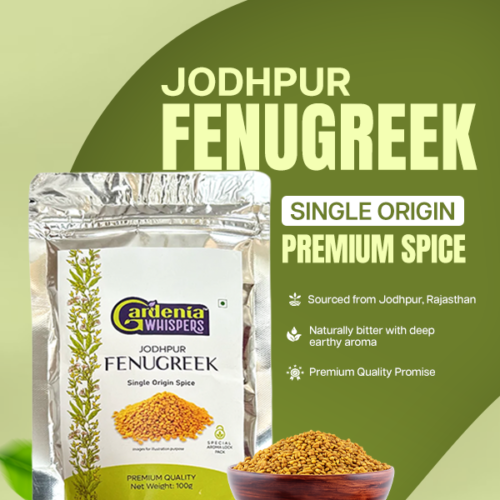
Yes, multiple clinical studies have shown that cinnamon supplementation can improve insulin sensitivity and reduce fasting blood glucose levels. A 2019 meta-analysis of 16 randomised controlled trials found significant reductions in fasting plasma glucose, total cholesterol, LDL, and triglycerides in participants who consumed cinnamon daily. The active compound cinnamaldehyde is believed to mimic insulin’s action at the cellular level, helping glucose enter cells more efficiently. For the safest daily use, choose Ceylon cinnamon to avoid coumarin-related liver stress. This effect complements other blood-sugar-friendly spices like fenugreek, which works through a different mechanism involving 4-hydroxyisoleucine.
Does cinnamon increase progesterone levels?
There is limited but emerging research on cinnamon’s effect on reproductive hormones. Some small studies have suggested that cinnamon supplementation may help regulate menstrual cycles in women with PCOS (Polycystic Ovary Syndrome) by improving insulin resistance, which indirectly influences the hormonal balance including progesterone production. However, there is no strong clinical evidence that cinnamon directly increases progesterone levels. If you are using cinnamon specifically for hormonal support, it is best used as one part of a broader dietary and medical approach under your doctor’s guidance.
Is ground cinnamon safe for people with GERD or acid reflux?
Cinnamon can be a mixed experience for people with GERD. In small amounts, its anti-inflammatory properties may actually help soothe mild digestive discomfort. However, Cassia cinnamon’s strong, pungent oils can irritate the oesophageal lining and worsen acid reflux symptoms in sensitive individuals. If you have GERD, Ceylon cinnamon is the safer choice because of its milder flavour profile and lower volatile oil intensity. Start with a very small amount, around a quarter teaspoon, mixed into food rather than consumed on its own, and observe how your body responds before increasing the quantity.
Can I use cinnamon with other spices for better health benefits?
Yes, cinnamon works synergistically with several other spices. Pairing it with fenugreek (methi) creates a powerful combination for blood sugar management, as both work through different biochemical pathways. Adding cinnamon to jeera water enhances the metabolic boosting effect. Combining it with Lakadong turmeric amplifies the anti-inflammatory and antioxidant benefits. In traditional Ayurvedic and Indian cooking, cinnamon has always been used alongside green cardamom and whole cloves in garam masala blends for both flavour complexity and combined therapeutic effect.
Is Ceylon cinnamon available in India?
Yes, but it is not commonly found in local kirana stores or open spice markets where Cassia dominates. You can find authentic, clearly labelled Ceylon cinnamon through speciality online spice sellers. Gardenia Whispers sources its Sri Lankan Cinnamon (True Cinnamon) directly from coastal plantations in Sri Lanka and ships it across India. The product page specifies the botanical species (Cinnamomum verum), the country of origin (Sri Lanka), and the coumarin safety profile so you can verify exactly what you are buying.
Why does Gardenia Whispers sell both Ceylon and Cassia cinnamon?
Because both have legitimate uses, and the problem is not the existence of Cassia but the dishonest labelling of it as “cinnamon.” Ceylon is ideal for daily health use, teas, smoothies, and baking where you want a mild, sweet flavour with zero coumarin risk. Cassia is better for heavy Indian cooking like biryanis, nihari, and slow-cooked curries where its bold, punchy bark flavour is actually desirable. By selling both varieties with transparent species and origin labelling, Gardenia Whispers empowers you to choose the right type for the right purpose instead of being misled by a generic “dalchini” label. Explore the full whole spice collection to see this transparency applied across every product.
How should I store cinnamon powder to keep it fresh?
Store cinnamon powder or whole quills in an airtight glass or stainless steel container, away from direct sunlight, heat sources, and moisture. A cool, dark pantry shelf is ideal. Whole cinnamon sticks retain their potency for up to 12 months when stored properly, while ground powder begins losing its volatile oils and flavour intensity after about 6 months. If the powder no longer releases a warm, sweet aroma when you open the container, it has likely lost most of its beneficial compounds and should be replaced. Buying whole quills and grinding small batches at home gives you the freshest, most potent cinnamon for both cooking and wellness use.