
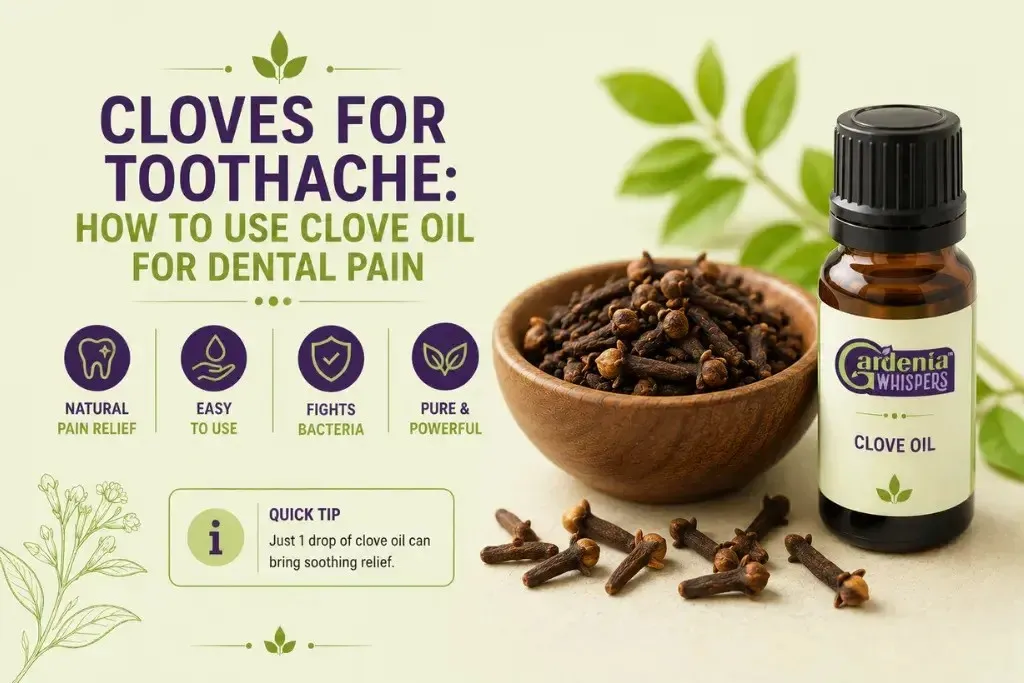
Sucking on a numbing drop or waiting for painkillers to kick in while a toothache worsens is a frustrating experience that most people have been through. What many don’t realise is that a single dried spice bud sitting in their kitchen can numb a dental nerve in under five minutes. If you need fast, natural relief from a swollen, aching tooth, learning how to use cloves for toothache is one of the most effective home remedies available-one that dentistry itself has borrowed from traditional practice.
To achieve genuine therapeutic numbing, you need to move beyond old supermarket spices and understand the chemistry that makes cloves work. The key to immediate pain relief is a high natural eugenol concentration, the correct application technique, and clove buds that are still rich in essential oil. Below, we explain the science behind clove’s nerve-numbing action, walk through safe home application methods, and show you how to identify cloves that are still medicinally potent.
How Cloves Relieve Dental Pain: The Science of Eugenol
The active compound responsible for clove’s pain-relieving effect is eugenol-a naturally occurring phenylpropanoid that acts as a potent local anaesthetic and anti-inflammatory agent. When applied to an aching tooth or inflamed gum, eugenol penetrates soft tissue and temporarily blocks the pain signals transmitted by exposed or irritated dental nerves.
Natural Anaesthetic and Antimicrobial Mechanism
- Targeted Nerve Numbing: When a whole clove is pressed against an aching tooth, eugenol is released directly from the bud and absorbed into the surrounding gum tissue, locally desensitising the nerve endings and providing short-term pain relief.
- Traditional Dental Use: The use of laung for toothache has been a trusted household remedy in Indian families for generations-applied to inflamed gums before a dental visit to reduce discomfort during the journey.
- Fast Local Numbing: Properly diluted clove oil applied to a painful tooth delivers a rapid, concentrated anaesthetic effect on sensitive nerve roots-often noticeable within two to three minutes of application.
- Eugenol Potency Determines Effectiveness: The speed and duration of pain relief depend almost entirely on how much eugenol the cloves retain after harvesting. Old, dried-out buds with depleted oils provide little to no numbing.
- Emergency Night Relief: Placing a whole clove gently against an aching tooth overnight is a widely used emergency measure for temporary relief when dental care is not immediately accessible.
What Clinical Research Shows
The effectiveness of cloves for dental pain is not just traditional knowledge-it is clinically documented. Research published in the Journal of Dentistry demonstrated that clove-based gels achieved oral mucosal desensitisation comparable to benzocaine injections-a standard topical anaesthetic used in modern dentistry.
- Antimicrobial Protection: Studies show that eugenol actively inhibits Streptococcus mutans and other common oral bacteria responsible for cavity formation and gum disease-providing both pain relief and infection control at the site of dental pain.
- Adopted by Modern Dentistry: Eugenol-based pastes are widely used in clinical dental practice as the active ingredient in temporary fillings and dry socket dressings, precisely because of their documented calming and antiseptic properties.
For a broader understanding of clove’s active chemistry and its other applications, read our detailed guide on clove oil benefits for teeth, skin, and purity testing.
Why Eugenol Concentration Determines Results

Not all cloves sitting on a supermarket shelf are medicinally useful. Many budget brands sell buds that have been stored for extended periods, during which the volatile essential oils-including eugenol-gradually evaporate. A clove bud that has lost its oils looks identical to a fresh one but provides none of the anaesthetic effect.
Why High Essential Oil Content Is Non-Negotiable
- Faster, Deeper Numbing: Cloves with high eugenol concentration deliver quicker and more thorough dental anaesthesia than old kitchen spices. The difference between a fresh, oil-rich clove and a depleted one is the difference between effective relief and no relief.
- Kanyakumari’s Geographical Advantage: The Kanyakumari whole cloves grown at the southern tip of India, where three seas converge, are globally recognised for producing some of the densest essential oil concentrations in any clove-growing region. The maritime climate and mineral-rich coastal soil drive exceptional eugenol levels.
- Longer Relief Between Applications: High-eugenol clove oil applied for dental pain allows longer intervals between re-application because the active compound concentration remains effective for a sustained period.
- Consistent Home Treatment Results: Natural toothache remedies are only reliable when the spices used still contain their full volatile oil reserves. Testing your cloves before use-using the methods below-ensures your home remedy will actually work.
How to Use Cloves for Toothache: Safe Application Guide
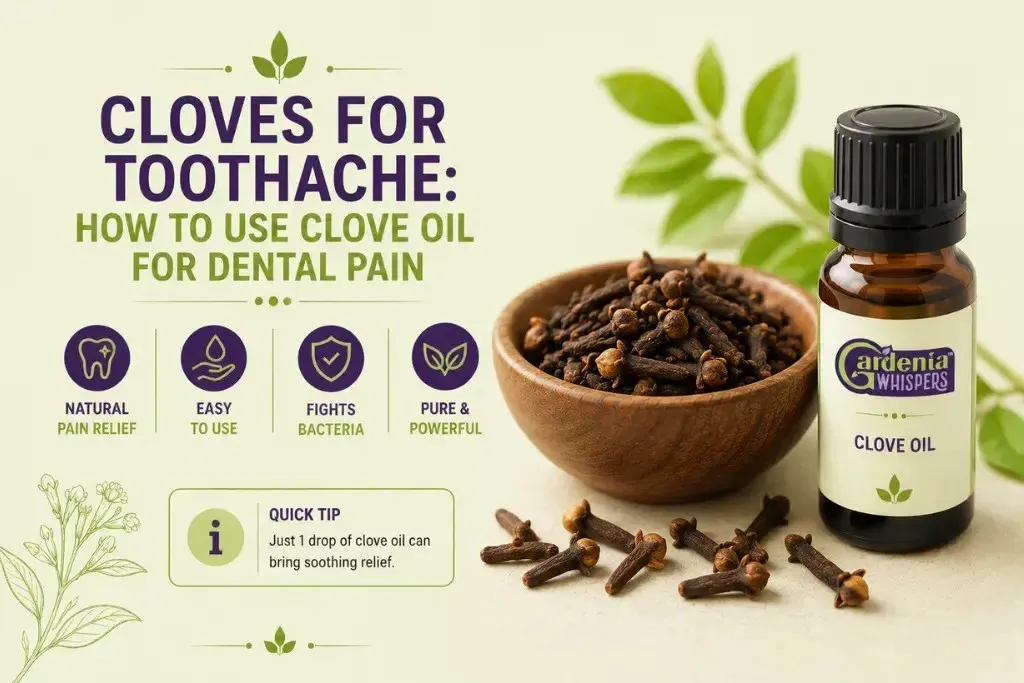
Natural essential oils must be used carefully to protect the mouth’s delicate mucous membranes. Following a structured application method ensures maximum pain relief with minimal risk of gum irritation or chemical burns from undiluted oil.
- Prepare the Diluted Oil Solution: Mix 2 to 3 drops of pure clove essential oil with half a teaspoon of a neutral carrier oil-coconut or olive oil both work well. Never apply undiluted clove oil directly to inflamed gum tissue; the high eugenol concentration in pure oil can cause chemical burns to sensitive mucosa.
- Apply with a Clean Cotton Swab: Soak a cotton swab or small cotton ball in the diluted oil mixture and press it gently against the source of pain or the cavity opening. Hold it in place for 5 to 10 minutes, touching only the affected area to avoid unnecessarily spreading the oil to surrounding tissues.
- Rinse with Warm Salt Water: Remove the cotton swab and rinse your mouth gently with warm salt water. This removes residual oil and debris, soothes surrounding inflammation, and neutralises the strong taste of eugenol.
This three-step method is safe, quick, and reliably effective when high-quality cloves are used. The use of traditional laung for toothache in this way has been practised in Indian households for centuries-and the mechanism that makes it work has since been confirmed by clinical dental research. For a deeper look at clove oil applications for oral and skin care, explore our complete guide to clove oil benefits.
How to Test Your Cloves for Oil Quality Before Use
Before using any clove as a home dental remedy, it is worth confirming that the buds still contain their essential oils. These three quick tests require nothing but the cloves themselves and items already in your kitchen.
Three Simple At-Home Quality Tests
- Stem Press Test: Press your thumbnail firmly into the clove stem. A fresh, oil-rich clove will immediately release a small, visible droplet of light-coloured essential oil at the press point. No oil means the bud has been depleted.
- Smell Intensity Test: Rub a single clove bud between your fingers. Genuine, fresh Kanyakumari cloves release a sharp, intensely warm, pungent aroma instantly. If the smell is faint, dusty, or absent, the volatile oils have already evaporated and the bud will deliver little numbing effect.
- Water Float Test: Drop several whole clove buds into a glass of clean water. Oil-rich cloves will either float vertically (bud upright) or sink to the bottom-their dense eugenol content affects their buoyancy. Buds that float horizontally on the surface have depleted oil content and are not suitable for medicinal use.
For a more comprehensive guide to testing any spice for quality and adulteration at home, read our article on how to identify pure spices.
Quality Comparison: Oil-Rich Cloves vs Exhausted Market Cloves
Use this table to compare what to look for when selecting cloves for dental or medicinal use:
Feature / Metric | Oil-Rich Premium Cloves | Exhausted Market Cloves |
Physical Appearance | Deep reddish-brown stem with intact, plump light-brown crown | Dull, grayish-black, brittle stems with missing or shrunken crowns |
Essential Oil Content | High active eugenol concentration (up to 18–20%) | Low or depleted essential oil content (below 5%) |
Numbing Capability | Fast, potent anaesthetic action for dental pain relief | Weak or negligible numbing effect on oral tissues |
Geographic Origin | Verified single-origin harvest from Kanyakumari, South India | Mixed, unverified commercial spice blends of unknown origin |
Effective use of cloves for tooth pain depends entirely on picking high-quality, un-extracted clove buds. Using laung for toothache is most reliable when the buds pass the oil tests above. Oil-rich Kanyakumari cloves provide a consistent, powerful natural toothache remedy that low-grade market cloves simply cannot replicate.
Key Takeaways for Conscious Consumers
- Always Dilute Essential Oils: Mix pure clove essential oil with a carrier oil such as coconut or olive oil before any oral application to avoid chemical burns to sensitive gum tissue.
- Prioritise Eugenol Content: Choose whole cloves with proven high eugenol concentration for fast, lasting dental numbing. Old, mass-produced spices will not deliver reliable pain relief.
- Test Your Cloves Before Use: Run the stem press test, smell test, and water float test to confirm that your clove buds are still oil-rich before using them medicinally.
- Use as a Temporary Measure Only: Cloves provide temporary pain relief. They cannot heal tooth decay, treat infections, or replace professional dental care. Always book a dental appointment.
- Choose Single-Origin Kanyakumari Cloves: For maximum eugenol density and reliable pain relief, source Kanyakumari whole cloves from a verified, direct-sourcing brand.
Conclusion: Experiencing Pure Quality with Gardenia Whispers
Fast, reliable toothache relief from natural remedies is only achievable when you start with the right ingredient. Old, depleted cloves sitting in a generic spice jar will not deliver the eugenol your dental nerves need. Understanding how to use cloves for toothache effectively begins with sourcing buds that are still genuinely oil-rich-and testing them before you use them.
Gardenia Whispers is committed to sourcing 100% pure, single-origin Kanyakumari whole cloves from the mineral-rich southern tip of India. Every batch is handpicked, verified for eugenol density, and packed without synthetic processing-so the volatile oils that make cloves medicinally powerful reach you intact. Shop our Kanyakumari whole cloves, explore our clove gift box, or start with our single-origin trial pack to bring genuine spice quality into your home today.
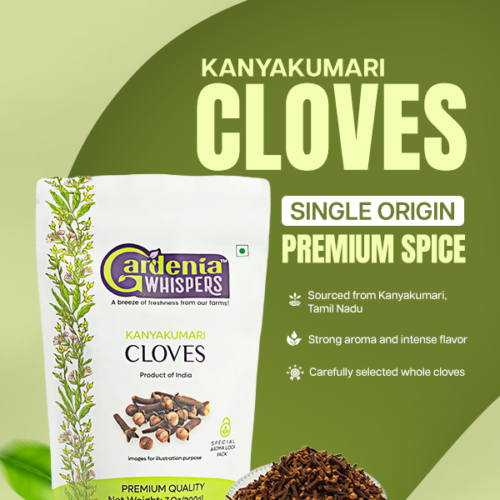
Western Ghat Laung – Handpicked Kanyakumari Whole Cloves
Price range: ₹120.00 through ₹565.00 incl. GSTClear30 g100 g200 gSelect options This product has multiple variants. The options may be chosen on the product page
Clove Gift Box – Grand Celebration Hamper with Spices & Treats
₹2,135.00 incl. GST