Every Indian kitchen has its own little spice box, and somewhere inside it sit those small, ridged seeds that smell of warm earth and wood smoke. In Hindi, cumin seeds are called जीरा (Jeera) ,scientifically known as Cuminum cyminum ,a spice that has transformed ordinary dals and curries into something deeply aromatic for centuries. But most people fail to notice that ordinary bottles bought from nearby stores usually lack any aromatics. If you want to know more about how this spice works, you have to go beyond the definition and see how harsh geographic conditions can make the best harvest possible.
In today’s increasingly transparent spice trade, knowing what you are buying matters as much as knowing how to cook with it. Understanding the Hindi name and regional identity of cumin connects you to centuries-old health traditions and helps you source the most authentic variety available.
Language of Spices: Regional Names Across India
India’s linguistic diversity is reflected in how it names its ingredients. While जीरा is the Hindi word most Indians recognise, exploring the regional names for cumin ,jeera ke naam ,across different states reveals how deeply this spice is woven into local food cultures.
Regional Names of Cumin Seeds Across Indian Languages
Identification of regional cumin names India provides culinary scientists with a clearer picture of the spice trade and how it moved through different ancient states.
- Preservation of Historical Background: Identification of regional cumin names India shows how trade routes brought together different foods on account of common phonetics.
- Improved Market Knowledge: Understanding the regional cumin names India allows shoppers to easily locate unadulterated seeds at local markets ,particularly in spice hubs like Ramganjmandi in Rajasthan, known for its single-origin Ramganjmandi coriander and other desert-grown spices.
- Cultural Diversity: Identification of regional cumin names India reveals how a common kitchen ingredient links all regional languages together effortlessly.
Exploring Varieties: जीरा के प्रकार (Types of Cumin)
All seeds on the supermarket shelves may not have the same chemical composition or taste characteristics. By having an insight into the various types of jeera, home chefs will be able to select the right one for the desired purpose.
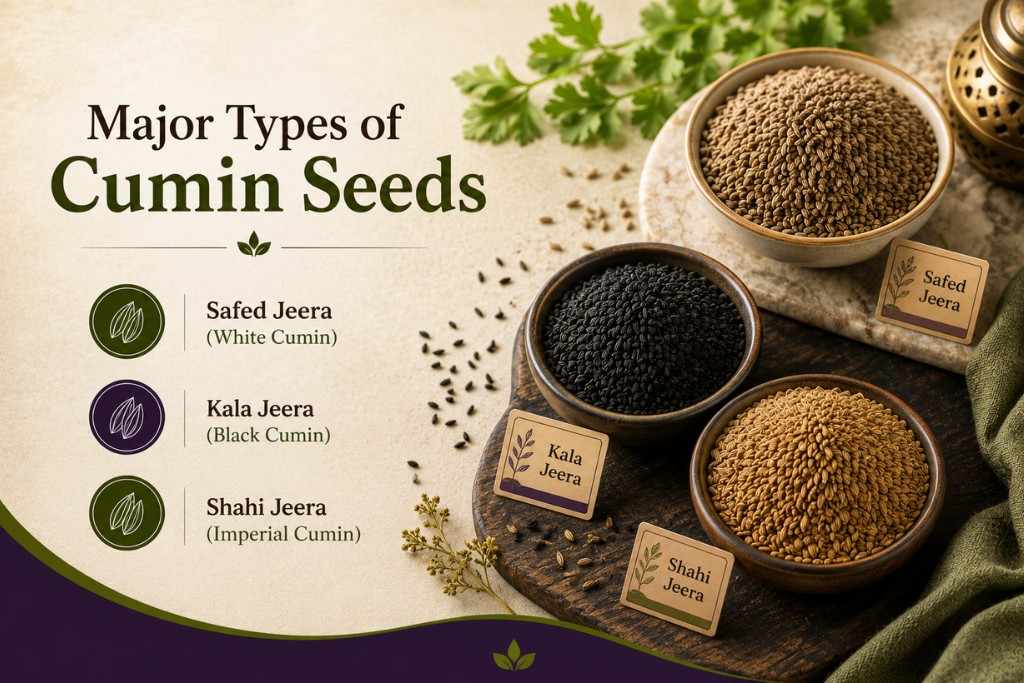
Types of Jeera: Safed, Kala, and Shahi Cumin
Each type of cumin plant has its own specific oil content and physical appearance.
- Safed Jeera (White Cumin): One of the most common types of जीरा के प्रकार, known for its warm brownish-grey colour and used extensively for tempering in everyday Indian cooking.
- Kala Jeera (Black Cumin): Considered one of the premium जीरा के प्रकार varieties with an intense woodsmoke flavour and a slender shape ,often used in Kashmiri and Persian-influenced recipes.
- Shahi Jeera (Imperial Cumin): One of the distinct categories of जीरा के प्रकार that is reserved for special Mughlai dishes like biryani and korma.
Impact of Varietal Quality
Choosing from among these options for जीरा के प्रकार ultimately depends on the aroma level and cooking style you prefer.
- Different Oil Concentrations: Seeds that fall under the heading of जीरा के प्रकार have very different concentrations of unprocessed volatile oil in their cell structures.
- Physical Differences in Appearance: Analysis of the various options of जीरा के प्रकार will show that superior seeds are those that have well-defined ridges and a consistent grey-brown hue.
Jodhpur Cumin: Why Thar Desert Spices Are Superior
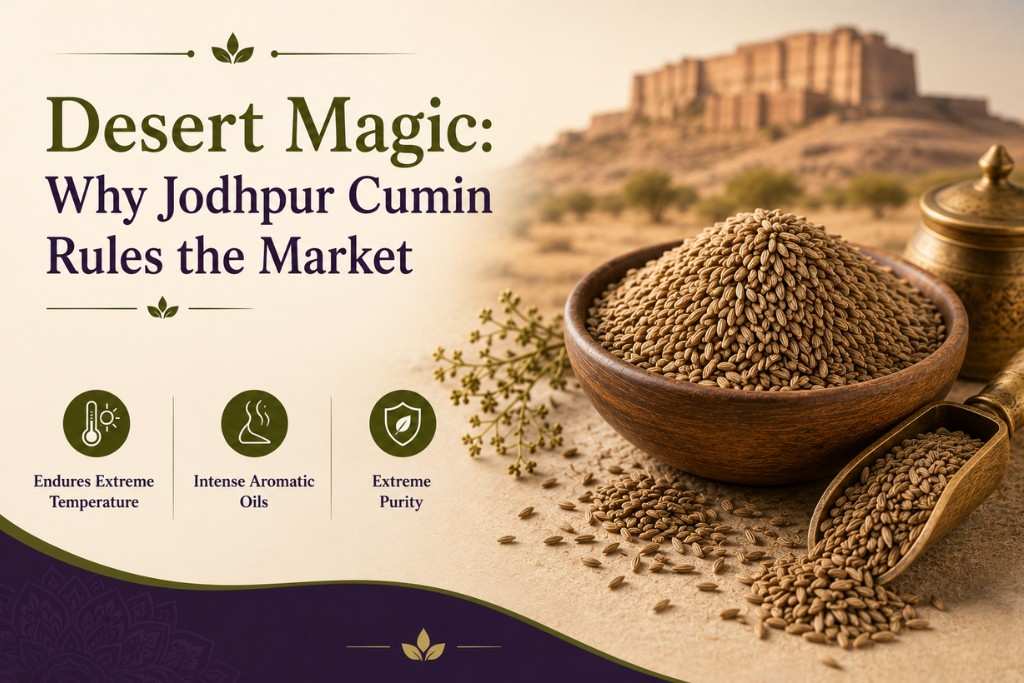
Environmental pressure is so intense for these plants that they must develop unique properties for defense. When sourcing the best quality cumin, you find that authentic Jodhpur cumin produces the maximum amount of natural volatile oils ,particularly cuminaldehyde, the primary aromatic compound responsible for cumin’s distinctive warmth and depth of flavour.
Science Behind Thar Region Spices
Growing crops under the stressful conditions of an arid climate forces the parent plant to preserve large quantities of nutrients in the form of seeds.
- Enduring Extreme Temperature Variations: Choosing high-quality Thar region spices means getting seeds that survived extreme daytime heat and cold desert nights ,a natural stress process that concentrates flavour compounds.
- Intense Aromatic Oil Compounds: The natural stresses of the Thar Desert cause the cumin plant to produce highly concentrated aromatic characteristics unmatched by flatland-grown varieties. For a deeper look, read our article on Jodhpur cumin vs. regular cumin.
- Extreme Purity: Opting for authentic Thar region spices means protecting yourself from commercially produced, adulterated plain-field crops.
Path to Global Authenticity and Protection
The unparalleled value of desert-grown cumin has led to national efforts to preserve its geographical origin.
- GI Tag Protection: The unique growing conditions of the Jodhpur region have led agricultural bodies to pursue GI Tag certification for Jodhpur cumin under India’s Geographical Indications of Goods Act ,a legal safeguard against adulteration and imitation.
- Ensuring Regional Authenticity: Possession of genuine GI tag cumin origin ensures that you are always using pure cumin that has not been mixed with anything industrial.
- Establishing Specialized Cultivation Techniques: Efforts being made for GI tag cumin certification are proof that certain soil types provide an exclusively superior agricultural product.
Culinary Mastery: जीरा के उपयोग (Uses of Cumin)
Harnessing the power of your natural spices demands that you understand traditional cooking procedures. Applying your जीरा के उपयोग wisely converts raw ingredients into something extremely complex and professional.
Cooking Application Methods of जीरा के उपयोग Traditionally
Using the right technique for your जीरा के उपयोग reveals unique flavours that simple boiling does not offer at all.
- Tadka Cooking Method: The most common way of applying your जीरा के उपयोग is tempering hot oil to obtain activated spices in your base ingredients. Try it in a classic restaurant-style jeera rice for a perfect everyday example.
- Dry Roasting: Another great trick for your जीरा के उपयोग is roasting the seeds and then crushing them over your fresh yoghurt or raita for an instant aroma boost.
- Spice Base for Blends: Checking the variety of uses of जीरा के उपयोग reveals how important it is as the basis of garam masala and curry powder.
Whole Cumin Seeds (Sabut Jeera) vs. Cumin Powder: Which to Choose?
The choice between using pre-ground powder or fresh sabut jeera will vary according to how you want the flavour to release during cooking.
- Sustained Flavour Release: Cooking with sabut jeera guarantees that your stews and dals have a continuous release of earthy, warming flavours throughout the cooking process.
- Textural Crunch Elements: A teaspoon of crunchy sabut jeera added to hot bread dough adds an interesting peppery crunch to every bite.
- Preservation of Natural Oils: Keeping a supply of fresh sabut jeera means that the natural volatile oils remain intact until they are activated by heat.
Wellness Breakdown: जीरा के फायदे (Benefits of Cumin)
Beyond the kitchen, jeera has been used in Ayurvedic medicine for over 3,000 years as a digestive aid and therapeutic spice. Modern research supports what traditional practitioners have long known: consistent use of high-quality cumin seeds delivers measurable health benefits. For a comprehensive deep-dive, read our full guide on the health benefits of Jodhpur cumin sabut jeera.
Here are the most significant जीरा के फायदे to know:
- Supports Digestion: Cuminaldehyde, the primary active compound in jeera, stimulates salivary glands and aids the secretion of digestive enzymes, easing bloating and indigestion.
- Rich in Iron: Just one teaspoon of cumin provides roughly 1.4 mg of iron, making it a valuable everyday spice for managing iron-deficiency anaemia.
- Antioxidant Properties: Cumin seeds contain flavonoids and polyphenols that neutralise free radicals and support long-term cellular health.
- Aids Weight Management: Jeera water ,made by soaking cumin seeds overnight ,is widely used to support metabolism and fat digestion. Learn how to prepare it in our jeera water for weight loss guide.
- Blood Sugar Regulation: Early studies suggest that cumin may help improve insulin sensitivity and stabilise blood sugar levels.
- Anti-inflammatory Action: The thymoquinone and antioxidants in cumin have demonstrated anti-inflammatory properties in peer-reviewed research.
Maximizing the Value of Raw Desert Seeds
In order to get the maximum value from your health practices, you must use high-quality desert-grown cumin and not flatland factory fillers.
- Twice the Nutrients: Using desert-grown cumin means that your daily health tonics will contain significantly higher concentrations of active compounds.
- Natural Detox Support: Using desert-grown cumin will help your body flush metabolic waste more efficiently, owing to its higher cuminaldehyde and antioxidant content.
Cumin Buying Guide: Standard vs. Premium Desert Cumin
To keep your kitchen operating flawlessly, here is a quick comparison of what separates standard market cumin from premium desert-grown varieties:
| Metric Category | Standard Market Option | Premium Desert Selection |
| Hindi Terminology | Basic translations of cumin seeds in Hindi | Elite single-origin जीरा sourced from Jodhpur |
| Linguistic Mapping | General entries for jeera ke naam | Exact regional cumin names India with provenance |
| Varietal Framework | Standard types of जीरा के प्रकार | Rich heirloom forms of जीरा के प्रकार |
| Culinary Strategy | Basic kitchen जीरा के उपयोग | Professional uses of aromatic sabut jeera |
| Health Outcomes | Basic everyday जीरा के फायदे | High-oil therapeutic जीरा के फायदे |
Using genuine Jodhpur cumin ensures that your family will have the best flavours and health benefits. The strong sun from the Marwar area ensures that the seeds get dried while still on the vine, trapping all the essential oils in the seed’s kernel. The concentrated farming method guarantees that every grain of sabut jeera used for cooking becomes exceptional. Read our complete Indian spice guide to explore how other single-origin Indian spices compare.
How to Check Cumin Purity and Oil Content at Home
You don’t need a lab to verify whether your cumin is pure. These three simple at-home tests ,aligned with the principles in our guide to identifying pure spices ,will tell you exactly what is in your jar.
- The Clear Glass Water Test: Detects artificial colour dyes and heavy fillers.
Put a teaspoon of your seeds in a clean glass of water. Genuine cumin seeds are light enough to float without releasing any colour into the water. Adulterated seeds or grass fillers treated with synthetic dyes will sink and immediately discolour the water ,a clear sign of tampering.
- The Paper Friction Compression Test: Determines whether volatile oils are present and active.
Put the seeds on the flat surface of fresh paper and rub them firmly with your thumb. Seeds of good quality will leave a clean oil streak and release a strong, peppery aroma, whereas low-quality factory fillers will leave no mark and smell of nothing.
- The Visual Ridge Symmetry Evaluation: Spots the hidden presence of weeds and grass fillers.
Pour your seeds on a flat, well-lit surface. Authentic, undiluted cumin seeds have clean oval forms with very regular vertical ridges and a distinctive grayish-brown hue, while cheap weed fillers appear as long, irregular yellow needles with no symmetry.
Key Takeaways for Conscious Spice Buyers
- Cumin seeds are called जीरा (Jeera) in Hindi ,the scientific name is Cuminum cyminum, a member of the Apiaceae family.
- Learn Regional Names of Jeera: Remember regional cumin names India and jeera ke naam in order to get premium quality ingredients from different states.
- Go for Superior Variety Cuts: Make sure to judge the quality of the सबुत जीरा before finalizing your monthly grocery purchases from the kitchen.
- Source Desert-Cultivated Crops: Source high-oil-content Jodhpur cumin and Thar region spices in order to make sure that you get an aromatic taste while cooking.
- Maximize Your Cooking Techniques: Ensure the maximum usage of the जीरा के उपयोग by sourcing the raw and whole sabut jeera.
Conclusion: Partnering with Gardenia Whispers for Radical Spice Purity
We are at a turning point when it comes to the foods we eat. Elevating our culinary experience means saying goodbye to old-fashioned, industrially processed ingredients and welcoming real, single-origin power foods. In reality, modern studies show us that food is most beneficial when we get the right raw materials; this tells us that one of the smartest things to do for our health is to select high-oil desert cumin. It is pretty easy to end up with oil-depleted agricultural waste when we just buy generic, dusty supermarket jars for our meals. The fact is this oil waste, as it is, has no aromatic value whatsoever.
At Gardenia Whispers, we source every batch of cumin directly from protected desert micro-farms in the Jodhpur region ,bypassing industrial supply chains entirely to deliver spices with their volatile oils and flavour compounds fully intact. We believe in delivering the rich taste and powerful therapeutic properties of traditional Indian spices to our customers. That’s why we help you rediscover the beauty of good ingredients, and at the same time, we remove the tired factory powders. Come on board and enjoy authentic, fragrant spices in your home again.
There’s a great video for you if you want a closer look at how the geographic location of different parts of the subcontinent affects spice production and harvesting methods. It explains agricultural practices and regional tracking that guarantee the purity of the local varieties, which are treasured by consumers.

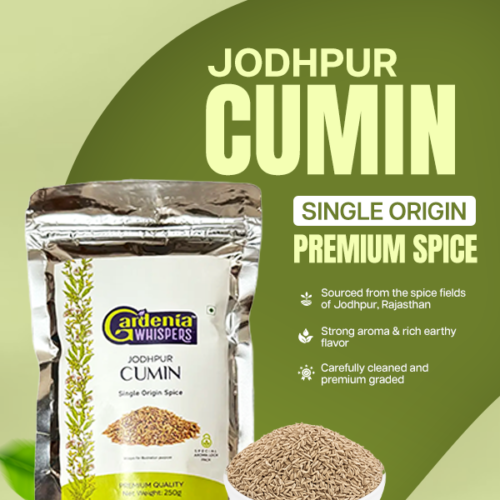
Farm-Fresh Jodhpur Cumin Seeds – Rajasthan’s Finest Jeera
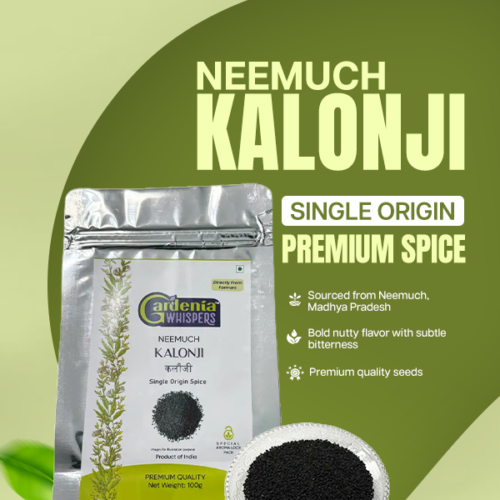
Price range: ₹65.00 through ₹175.00 incl. GSTClear40 g100 g250 gSelect options This product has multiple variants. The options may be chosen on the product pageNeemuch Kalonji – Nigella Seeds (Black Cumin) from Rajasthan
Price range: ₹45.00 through ₹105.00 incl. GSTClear30 g100 gSelect options This product has multiple variants. The options may be chosen on the product page