Most home cooks assume all turmeric is turmeric, all cumin is cumin. It is not. The same spice grown fifty kilometres apart, on different soil, at a different elevation, produces a chemically distinct product – one that tastes different, performs differently in cooking, and carries different nutritional properties.
This guide covers the origin, GI-tag status, adulteration risks, home purity tests, and sourcing story for the spices Gardenia Whispers sources directly from Indian farms. Everything here is verifiable. Every test can be done in two minutes at home.
What makes an Indian spice genuinely pure?
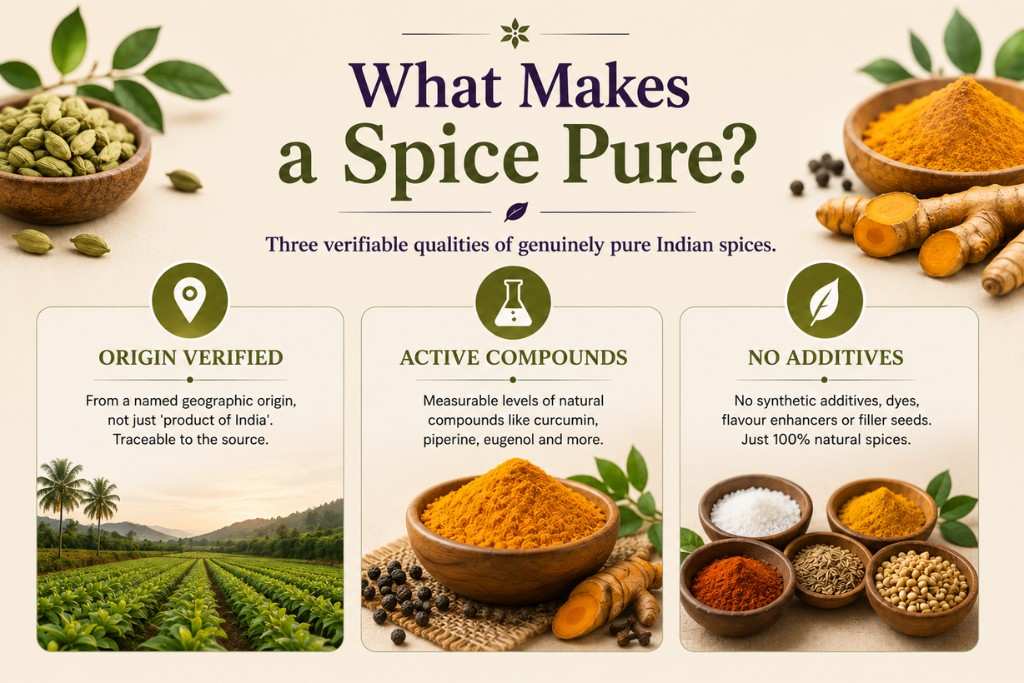
Pure Indian spices have three verifiable qualities: a named geographic origin (not just product of India), a measurable active compound level (curcumin, piperine, eugenol), and no synthetic additives, dyes, or filler seeds.
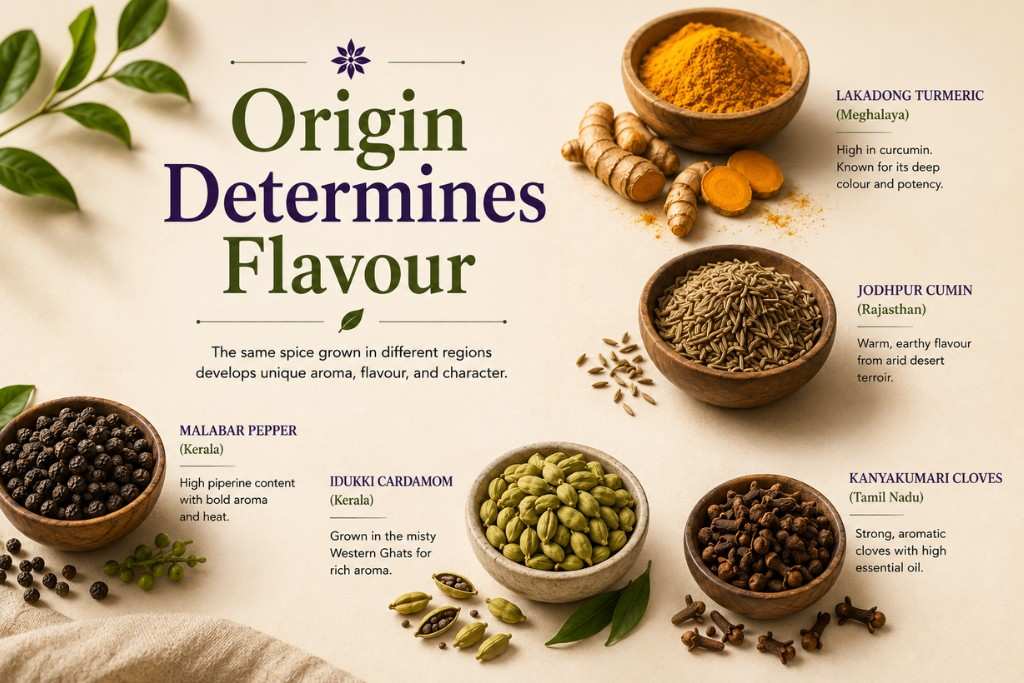
Why Origin Determines Flavour: The Science of Spice Terroir
The essential oil profiles, active compound concentrations, and aromatic volatile compositions of spices are direct products of their growing environment. Soil pH alters the ratio of aromatic compounds. Elevation changes the rate at which volatile oils accumulate in seed coats. Rainfall timing determines whether a cumin seed produces tight, dense essential oil or a diluted, watery volatile.
This is not artisanal marketing language. It is agricultural chemistry. And it is why how a spice is sourced matters as much as the spice itself.
Three Indian Growing Environments and What They Produce
Coastal Lowland Environments (Kerala, Tamil Nadu): High humidity, laterite soil, and consistent rainfall produce dark, heavy peppercorns with 4-5% piperine content – roughly twice the level found in commodity pepper.
Cardamom grown in the misty Western Ghats at 800-1,500 m produces pods with 6-8% essential oil content, dominated by 1,8-cineole and alpha-terpinyl acetate. These are the aromatic compounds that define the character of true green cardamom.
Arid Inland Terroirs (Rajasthan): The sandy loam desert soil of Jodhpur produces cumin with cuminaldehyde concentrations of 25-30% of total essential oil – the compound responsible for the warm, earthy-nutty aroma that makes North Indian cooking distinctive.
Fenugreek grown in the same belt reaches diosgenin concentrations of 0.8-1.2%, the active compound responsible for its characteristic bitterness and metabolic properties.
Tropical Island Terroirs (Sri Lanka):Ceylon cinnamon (Cinnamomum verum) grown in Sri Lanka produces paper-thin bark with 0.004% coumarin content.
Cassia, the variety sold in most Indian markets as cinnamon, contains 1-12% coumarin – 250-300 times higher. For regular cooking use, this distinction matters.
GI Tags and What They Actually Protect
India’s Geographical Indications of Goods (Registration and Protection) Act, 1999, grants legal protection to products whose quality, reputation, or other characteristics are attributable to their geographic origin. For spices, a GI tag means the name is legally restricted: only pepper grown on the Malabar Coast can be sold as Malabar Pepper; only turmeric from Lakadong village can bear the Lakadong name.
What GI tags do not protect against is adulteration within the supply chain. A GI-tagged spice can still be mixed with lower-grade stock by an unscrupulous intermediary after leaving the farm. This is why source traceability matters as much as the tag itself. You can read more about how Gardenia Whispers approaches this on our certifications page and quality promise page.
Key GI-tagged spices from India include:
Malabar Pepper – GI/2004/0001, among the first GI tags issued in India
Individual Spice Profiles: Origin, GI Status, Adulteration and How to Test at Home
Each profile below covers what makes that spice’s origin significant, what its GI or certification status means in practice, the specific adulteration methods documented by the FSSAI and Spices Board, a reliable home purity test you can perform in two minutes, and a note on how Gardenia Whispers sources it.
Lakadong village, Jaintia Hills, Meghalaya. High-altitude tribal farmland at 1,200-1,500 m elevation. Harvested January-February by Khasi farming communities using traditional hand-digging methods.
GI-Tag Status
Lakadong Turmeric holds GI recognition under India’s Geographical Indications of Goods Act. Curcumin content: 7-12% (compared to 2-3% in commercial turmeric). Registered as a protected variety by the Government of Meghalaya.
Common Adulteration
Lead chromate added to boost the colour of low-grade or old turmeric powder – a serious FSSAI-flagged adulterant classified as a heavy metal toxin. Also: metanil yellow (an industrial dye), starch fillers, and chalk powder added to increase weight.
Home Purity Test
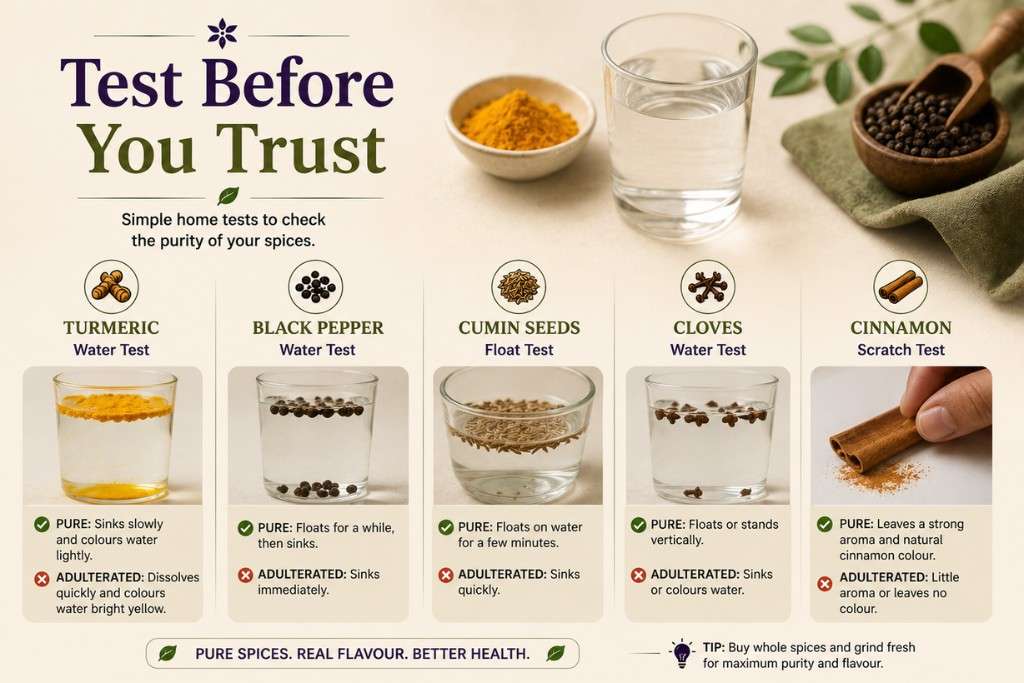
Water test: Stir half a teaspoon of turmeric powder into a glass of water. Pure turmeric slowly settles, leaving lightly coloured water. Adulterated turmeric turns the water bright yellow immediately and may leave coloured streaks. Hydrochloric acid test: A drop of dilute HCl on pure turmeric turns it pink-red, then fades. Lead chromate causes the colour to persist permanently.
GW Sourcing Note
GW sources Lakadong turmeric directly from Jaintia Hills, batch-tested at 7%+ curcumin. Sealed within 48 hours of grinding – no intermediaries, no blending with commercial varieties. Shop Lakadong Turmeric.
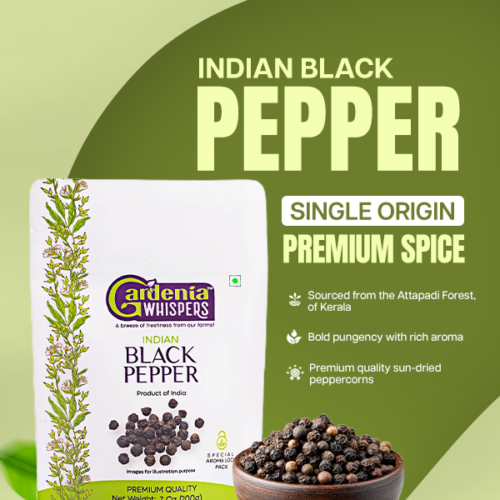
Wayanad district, Kerala, on the Malabar Coast. Grown at 700-900 m elevation in the Western Ghats under shade canopy. Harvested October-January when berries reach full maturity on the vine.
GI-Tag Status
Malabar Pepper holds GI status (GI/2004/0001) – among the first GI tags issued in India. Piperine content in Wayanad pepper: 4-5.5% (commercial commodity pepper: 1.5-2%). Also carries Organic Certification from participating farms.
Common Adulteration
Papaya seeds – visually near-identical to peppercorns when dried and treated. Mineral oil coating used to make old dull pepper appear fresh and glossy. Synthetic piperine isolate blended into lower-grade pepper powder to fake potency. Castor seeds in rare cases – toxic if consumed in quantity.
Home Purity Test
Float test: Drop peppercorns into water. Genuine Malabar peppercorns sink. Lightweight papaya seeds and hollow adulterant berries float to the surface. Paper oil test: Press 5-6 peppercorns firmly onto white paper. Authentic pepper leaves a faint natural oil ring with no smear or colour transfer. Mineral-oil-coated pepper leaves a slick, coloured stain.
GW Sourcing Note
GW sources Malabar peppercorns from a single Wayanad estate on the Malabar Coast, Kerala. Hand-picked at full maturity, sun-dried on-farm. Shop Malabar Black Pepper.
Idukki district, Kerala, at 800-1,500 m elevation in the Western Ghats. Misty, high-rainfall microclimate produces the largest, most aromatic pods. Harvested August-November by hand – each pod individually clipped to avoid damaging the plant.
GI-Tag Status
Idukki Cardamom has applied GI status under the Spices Board of India. Essential oil content: 6-8% (primarily 1,8-cineole and alpha-terpinyl acetate). Graded under Spices Board standards as Alleppey Green Extra Bold (AGEB) at the highest tier.
Common Adulteration
Bleaching with hydrogen peroxide or sulphur dioxide to make aged pods appear artificially bright green – destroys essential oil content. Synthetic essential oil injection into dried pods. Crushed seed powder mixed with sawdust and pressed into cheap capsules sold as ground cardamom.
Home Purity Test
Squeeze test: Press a pod firmly between two fingers. Genuine Idukki cardamom is firm, holds its shape, and releases an immediate, strong, clean sweet aroma. Bleached or old pods feel papery and produce a faint, chemical smell. Visual check: Authentic green cardamom ranges from pale green to olive. Overly uniform bright green is a bleaching signal.
GW Sourcing Note
GW’s Idukki cardamom comes from the Western Ghats at 1,200 m elevation – harvested by hand, graded AGEB, shipped without fumigation. Shop Idukki Cardamom.
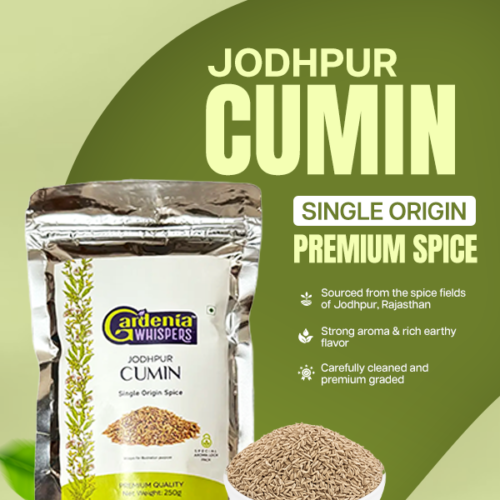
Jodhpur district, Rajasthan – India’s single largest cumin-producing region, responsible for over 70% of national output. Sandy loam desert soil with low humidity and high temperature variation between day and night. Harvested February-March.
GI-Tag Status
Rajasthan cumin (jeera) is recognised under AGMARK grading. The active aromatic compound is cuminaldehyde, present at 25-30% of the essential oil in Jodhpur varieties. No standalone GI tag yet; applied-for status under review.
Common Adulteration
Grass seeds (particularly Eragrostis cynosuroides) mixed in to increase weight – visually very similar to cumin. Cumin treated with carbon to darken its colour and make old stock appear freshly harvested. Chalk powder and starch fillers added to pre-ground cumin powder.
Home Purity Test
Rub test: Take 5-6 cumin seeds between your palms and rub vigorously. Authentic cumin releases a strong, warm, earthy-nutty smell within seconds. Grass seed adulterants produce little to no aroma. Colour check for powder: Pure cumin powder is a warm khaki-brown. An overly dark powder or one that smells faintly of burning may have been carbon-treated.
Ramganjmandi, Kota district, Rajasthan – India’s largest coriander trading hub and the source of the country’s finest Eagle variety seeds. Flat, fertile black-cotton soil, harvested February-March when the seed heads turn a uniform light brown.
GI-Tag Status
Ramganjmandi coriander (Eagle variety) is the benchmark grade on Indian commodity exchanges. Linalool content – the compound responsible for its warm, citrusy, mildly sweet aroma – is highest in Ramganjmandi Eagle vs all commercial varieties. AGMARK Special grade.
Common Adulteration
Dung-coated seeds: low-grade coriander treated with dried animal dung to add weight and create a falsely earthy aroma. Ergot fungus contamination in poorly stored batches. Pre-ground coriander commonly blended with dried lemon peel powder or inferior seed varieties.
Home Purity Test
Float test: Place a small handful of seeds in water. Healthy, oil-rich coriander seeds sink or remain partially submerged. Empty, dung-coated, or old seeds float. Crush test: Crush 2-3 seeds between your fingers. Fresh Ramganjmandi coriander releases a warm, citrusy, slightly floral scent immediately. Stale or adulterated seeds smell flat or musty.
GW Sourcing Note
GW sources Eagle-grade coriander from Ramganjmandi – India’s coriander capital – hand-sorted, cleaned, and sealed at origin. Shop Ramganjmandi Coriander.
Mahendragarh district, Haryana – part of India’s mustard belt in the semi-arid Indo-Gangetic plain. Black mustard (Brassica nigra) grown in well-drained loamy soil. Harvested February-March, threshed by hand to preserve seed integrity.
GI-Tag Status
Indian black mustard does not currently carry individual GI certification, but is graded under AGMARK standards. The active pungency compound is allyl isothiocyanate, released when seeds are crushed or heated in oil. High glucosinolate content in Haryana black mustard vs yellow mustard varieties.
Common Adulteration
Argemone seeds (Argemone mexicana) – a toxic weed seed – are the most dangerous mustard adulterant in India. Visually similar to black mustard but contain the toxin sanguinarine, responsible for epidemic dropsy outbreaks. FSSAI maintains a zero-tolerance policy. Also: artificially coloured yellow mustard sold as black mustard.
Home Purity Test
Surface test: Rub seeds between fingers on white paper. Authentic mustard seeds have a smooth, rounded, uniform surface. Argemone seeds have a slightly rough, ridged surface and no pungency when crushed. Water test: Soak seeds for 5 minutes. Argemone seeds do not swell or change colour. Genuine mustard seeds begin to slightly swell and the coating loosens.
GW Sourcing Note
GW’s black mustard comes from Mahendragarh, Haryana – hand-sorted for argemone seed contamination at source, then verified again at dispatch. Shop Mahendragarh Black Mustard.
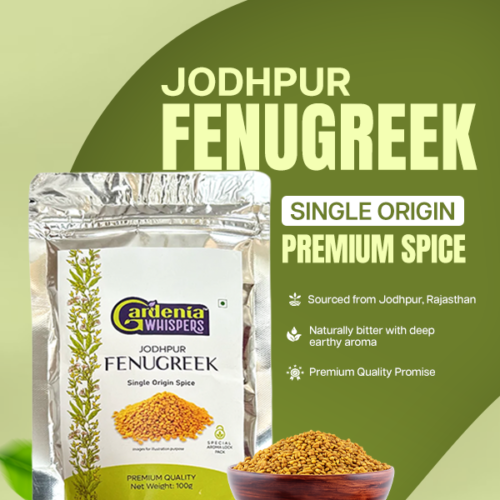
Jodhpur district, Rajasthan. The same arid, sandy loam belt that produces GW’s cumin. Fenugreek (methi) thrives in dry, low-moisture conditions. Rajasthan accounts for over 80% of India’s fenugreek production. Harvested December-January.
GI-Tag Status
Rajasthani fenugreek holds AGMARK recognition. Active bitter compound: diosgenin (a steroidal saponin at 0.8-1.2% in quality seeds). Also contains 4-hydroxyisoleucine, the compound associated with glucose metabolism benefits. No standalone GI tag.
Common Adulteration
Damaged or low-grade fenugreek mixed with full seeds. Artificial colouring used on over-dried yellow seeds to restore the natural pale-yellow-green appearance of fresh stock. Ground fenugreek powder commonly blended with gram flour (besan) – reduces both bitterness and therapeutic potency.
Home Purity Test
Bite test: Bite a single seed. Authentic Jodhpur fenugreek has a clean, direct, maple-like bitterness. Coloured or old seeds taste flat, musty, or have a secondary sour note. Texture test for powder: Pure fenugreek powder is pale yellowish-beige. Gram flour blending produces a grainier texture under the finger and a more neutral, bland taste vs the characteristic fenugreek bitterness.
Kanyakumari district, Tamil Nadu – India’s southernmost tip, where the Arabian Sea, Bay of Bengal, and Indian Ocean meet. High humidity, laterite soil, and coastal microclimate produce cloves with exceptionally high eugenol content. Harvested September-January by hand-picking individual flower buds before they open.
GI-Tag Status
Kanyakumari cloves are recognised as a protected regional variety by the Spices Board of India. Eugenol content: 72-90% of essential oil – the highest of any Indian-grown clove variety. Classified as Grade 1 hand-picked under Spices Board norms.
Common Adulteration
Exhausted cloves: cloves that have been steam-distilled to extract their essential oil for industrial use, then dried and resold as whole cloves. They look identical but contain almost no eugenol. Clove stems sold mixed with buds – stems contain only 5-6% essential oil vs 15-20% in buds. Mineral oil coating to restore the appearance of shine to old cloves.
Home Purity Test
Float test: Drop cloves into a glass of water. Genuine eugenol-rich cloves sink vertically or float horizontally. Exhausted cloves float upright with the stem pointing down – the most reliable single test. Nail press test: Press a clove against your thumbnail. Authentic cloves leave an immediate oily mark and a sharp, intense eugenol scent within seconds.
GW Sourcing Note
GW’s cloves come from Kanyakumari – handpicked at bud stage before flowering, sun-dried on-farm. Drop one in water, and it sinks. Shop Kanyakumari Cloves.
Sri Lanka (formerly Ceylon) – the only source of true cinnamon (Cinnamomum verum), as opposed to cassia (Cinnamomum cassia), which is the variety sold in most Indian and global markets as “cinnamon.” Harvested from the inner bark of two-year-old shoots, hand-rolled into quills.
GI-Tag Status
Ceylon Cinnamon holds Protected Designation of Origin (PDO) status in the EU and is recognised internationally as the distinct, protected variety. Coumarin content: 0.004% (versus 1-12% in cassia). Sri Lanka produces 80-90% of global true cinnamon supply.
Common Adulteration
Cassia sold as cinnamon: the single most widespread spice adulteration globally. Cassia is a cheaper, harder bark with a strong, astringent taste and 250-300 times more coumarin than true cinnamon. Regular consumption of cassia at therapeutic doses carries a documented risk of liver toxicity. Cassia quills are thick, single-layer, and hard to break; Ceylon cinnamon quills are paper-thin, multi-layered, and crumble easily.
Home Purity Test
Break test: Snap the quill in your fingers. Ceylon (true) cinnamon is paper-thin and crumbles into layers. Cassia is hard, thick, and breaks with significant force. Iodine test for powder: Add 2 drops of iodine solution to a pinch of cinnamon powder. Pure Ceylon cinnamon turns slightly reddish-brown. Cassia turns deep blue-black – a clear distinction.
Spice adulteration is an economic problem. When the market price of turmeric rises, the margin available to an adulterant who dilutes 1 kg of turmeric with 200 g of starch and lead chromate and charges the same price is significant. The Indian spice supply chain has enough intermediary steps between farm and retail that adulteration can happen at multiple points without detection.
The FSSAI (Food Safety and Standards Authority of India) conducts regular surveys. Its 2022 National Food Safety Index flagged spice adulteration as one of the most prevalent food fraud categories in the country, with turmeric, chilli powder, and cumin among the most frequently adulterated commodities.
The Most Dangerous Adulterants
Lead chromate in turmeric: A heavy metal compound classified as a Group 1 carcinogen. Added to brighten the colour of dull, old turmeric. FSSAI maximum permissible limit: zero. No safe level of consumption.
Argemone seeds in mustard: Contains sanguinarine, a benzophenanthridine alkaloid linked to epidemic dropsy – a condition causing swelling, skin lesions, and in severe cases, cardiac and respiratory failure. Multiple documented outbreaks across India since 1998.
Metanil yellow in turmeric and besan: An industrial azo dye banned for use in food by the FSSAI. Causes neurological and carcinogenic effects with chronic exposure.
Exhausted cloves: Cloves stripped of their essential oil content by steam distillation for industrial fragrance use, then dried and resold. Visually identical to genuine cloves. Zero culinary or therapeutic value.
Cassia sold as cinnamon: Not dangerous in small amounts, but at the doses recommended for therapeutic use (1-3 g/day), the coumarin content of cassia creates a documented risk of liver toxicity.
A Note on Pre-Ground Powders
Every adulteration method described in the spice profiles above becomes undetectable once a spice is pre-ground. Lead chromate in turmeric powder cannot be identified by eye; metanil yellow requires a chemical test. Adulteration in whole-spice form is detectable using simple physical tests. Adulteration in powder form requires laboratory equipment.
For spices you must buy pre-ground, single-origin sourcing with batch-level testing documentation – not just a GI tag – is the only practical protection available to a home cook. Read more about our approach on the Gardenia Whispers quality promise page.
The Gardenia Whispers Sourcing Story
Gardenia Whispers began with a straightforward observation: the gap between what Indian spices can taste like at source – freshly harvested, from named farms in named regions – and what reaches most Indian kitchens through the retail supply chain is enormous. That gap is not inevitable. It is the result of a supply chain built around volume, shelf life, and lowest-cost blending rather than quality, traceability, and freshness.
Every spice Gardenia Whispers sells is sourced from a single named origin – not a “product of India” blend, but Lakadong village in Meghalaya for turmeric, Wayanad district in Kerala for pepper, Idukki Hills for cardamom, Jodhpur district for cumin and fenugreek, Ramganjmandi for coriander, Mahendragarh for mustard, Kanyakumari for cloves, and Sri Lanka for true cinnamon. The origin is on every product page because it is the most important fact about the spice. You can read the full story on our Our Journey page .
Direct Sourcing: What It Means in Practice
Direct sourcing means no commodity traders, no wholesale blending warehouses, and no corporate middlemen between the farm and your kitchen. It means GW contacts partner farmers or farming cooperatives directly, agrees on a price at harvest, and receives the spice sealed at source. It means the Lakadong turmeric you receive was growing in the Jaintia Hills of Meghalaya four to six weeks before it arrived at your door – not sitting in a warehouse for eight months while its curcumin content slowly degraded.
It also means the sourcing story can be told precisely because it is known. The Malabar peppercorns in GW’s inventory came from a single Wayanad estate. The cardamom was handpicked in Idukki by labourers who clip each pod individually to preserve the plant. The cinnamon quills are hand-rolled from paper-thin Ceylon bark by artisans in Sri Lanka for whom the quality of the roll determines the grade and therefore the price they receive.
You can read more about our sourcing philosophy on the How We Source page.
Quality Verification
Gardenia Whispers’ quality process has three stages. First, sourcing from partner farms with documented growing practices – where we know the soil, the harvest timing, and the handling method. Second, visual and olfactory inspection on arrival – adulteration in whole spices is physically detectable, and the tests described in the spice profiles above are conducted on every incoming batch. Third, sealed-at-origin packaging that prevents oxidation and moisture ingress between dispatch and delivery.
What we claim is that single-origin, direct-sourced, whole spices from named Indian farms – sealed shortly after harvest – are structurally less vulnerable to adulteration, degradation, and quality fraud than commodity-blended spices from opaque supply chains. That is a structural guarantee, not a marketing claim. See our certifications for full details.
Our Promise
At Gardenia Whispers, the most important sentence on any spice label is where it came from. Not premium quality, not “natural and pure” – those words cost nothing to print. Origin is a fact. It is verifiable. And it is the single most reliable indicator of what you are actually cooking with.
Every spice we sell tells you its origin, its active compounds, and how to verify its purity at home. Because if you can test it yourself, you do not have to take our word for it.
Key Takeways
Origin, soil, and climate directly shape the flavour, aroma, and potency of Indian spices.
A pure spice should have a clear source, strong natural aroma, and no added colour, fillers, or synthetic additives.
GI tags help prove origin, but traceable sourcing is still important to avoid adulteration.
Simple home tests can help you check spice purity before using them in your kitchen.
Conclusion
The difference between a good spice and a great one is not a matter of taste preference. It is a matter of chemistry, geography, and supply chain integrity. When you cook with Lakadong turmeric, Malabar pepper, and Kanyakumari cloves with eugenol-rich oil that sinks in water, you are not experiencing a premium product category. You are experiencing what Indian spices have always been capable of tasting like before commodity supply chains processed the character out of them.
The tests in this guide give you the tools to verify what you are buying before it goes into your food. The profiles tell you what origin signals to look for. And Gardenia Whispers’ sourcing model gives you a direct route to the farms where the best versions of these spices actually grow.
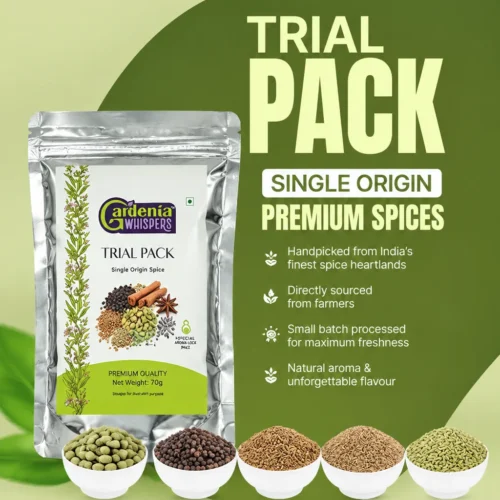
If you want to start with the full range, the single-origin trial pack is the fastest way to taste the difference.
Indian Spice Guide: Frequently Asked Questions
What is a GI tag and which Indian spices have one?
A GI (Geographical Indication) tag is a legal protection granted under India's Geographical Indications of Goods Act, 1999. It restricts the use of a name to products genuinely originating from a specific region - only pepper grown on the Malabar Coast can be sold as Malabar Pepper, and only turmeric from Lakadong village can carry the Lakadong name. Key GI-tagged spices include Malabar Pepper (GI/2004/0001), Lakadong Turmeric, and Idukki Cardamom. Ceylon Cinnamon holds EU Protected Designation of Origin (PDO) status. A GI tag confirms regional origin but does not guarantee the spice has not been adulterated after leaving the farm, which is why direct sourcing and traceability matter alongside certification.
Is the cinnamon sold in Indian supermarkets real cinnamon?
Most cinnamon sold in Indian supermarkets and kirana stores is cassia (Cinnamomum cassia), not true cinnamon (Cinnamomum verum). Cassia contains 1-12% coumarin compared to 0.004% in genuine Ceylon cinnamon. For occasional cooking use the difference is minor, but for regular daily consumption or therapeutic doses, cassia's coumarin content carries a documented risk of liver toxicity. You can confirm the difference at home using the break test: true cinnamon crumbles into paper-thin layers; cassia is a hard, single-layer bark that does not break easily. Gardenia Whispers sources genuine Ceylon cinnamon from Sri Lanka.
How do I know if my turmeric powder is adulterated?
Two reliable home tests work without any special equipment. Water test: stir half a teaspoon of turmeric into a glass of water. Pure turmeric settles slowly and leaves lightly coloured water. Adulterated turmeric turns the water an unnaturally vivid yellow immediately and may leave streaks on the glass. Hydrochloric acid test: a drop of dilute HCl on pure turmeric turns it pink-red, then fades. Lead chromate causes the colour to persist permanently. The most reliable long-term protection is buying single-origin turmeric from a traceable source rather than relying on testing alone.
What does curcumin percentage actually mean, and why does it matter?
Curcumin is the primary bioactive compound in turmeric - the polyphenol responsible for its anti-inflammatory properties, its role in Ayurvedic medicine, and its distinctive golden colour in cooking. Commercial turmeric from bulk supply chains typically contains 2-3% curcumin. Lakadong turmeric from Meghalaya contains 7-12% curcumin - three to four times higher. This difference shows in cooking (deeper colour, stronger flavour) and in nutritional value. Curcumin concentration is determined almost entirely by the variety of turmeric and its growing conditions, which is why named-origin sourcing matters beyond marketing.
How do I test if black pepper is pure at home?
Two tests cover the most common adulterants. Float test: drop peppercorns into a glass of water. Genuine Malabar peppercorns sink. Papaya seeds - one of the most common pepper adulterants - are lightweight and float to the surface. Paper oil test: press 5-6 peppercorns firmly onto white paper. Authentic pepper leaves a faint natural oil ring with no smear or colour transfer. Mineral-oil-coated pepper, which is often used to make old stock appear fresh and glossy, leaves a slick, coloured stain. Gardenia Whispers sources Malabar peppercorns from a single Wayanad estate.
Why does Indian cooking use whole spices alongside ground spices?
Whole spices and ground spices perform different functions in a dish. Whole spices - cardamom pods, cloves, cinnamon quills, cumin seeds - are added to hot fat at the beginning of cooking. The heat ruptures their cell walls and releases fat-soluble aromatic compounds into the cooking medium, which then carry those aromatics into every ingredient the fat touches. Ground spices are added later to build the flavour base - they dissolve into liquids and coat ingredients. Using both gives a dish aromatic depth from the whole spices combined with integrated flavour from the ground spices. Using only ground spices from the start produces a flat, one-dimensional result by comparison. You can read more about which whole spices every Indian kitchen needs.
How long do whole spices last compared to ground spices?
Whole spices stored correctly in airtight containers away from heat and light retain full potency for 2-4 years. Grinding ruptures cell walls and immediately begins releasing volatile oils, so ground spices start losing potency from the moment they are ground. Ground spices bought from supermarkets may have been sitting in the supply chain for 6-12 months before they reach you. For spices you use regularly - cumin, coriander, fenugreek - buying whole and grinding a small batch every 2-3 weeks produces noticeably better cooking results than using pre-ground powder from a jar.
What is single-origin sourcing for spices, and why does it matter?
Single-origin sourcing means the spice comes from one specific farm, cooperative, or geographic region - not blended from multiple sources. Most commercial spices are aggregated from many farms across several regions, which averages out quality, masks regional flavour profiles, and creates opportunities for lower-grade material to be mixed into the batch. Single-origin sourcing means the cumin you buy came only from Jodhpur, harvested in a specific season, from identified growers. The practical benefit is traceability (you know exactly what you have) and consistency (the flavour profile reflects one specific terroir rather than a blended average). Gardenia Whispers sources all its spices on a single-origin basis - every product page names the exact growing region.