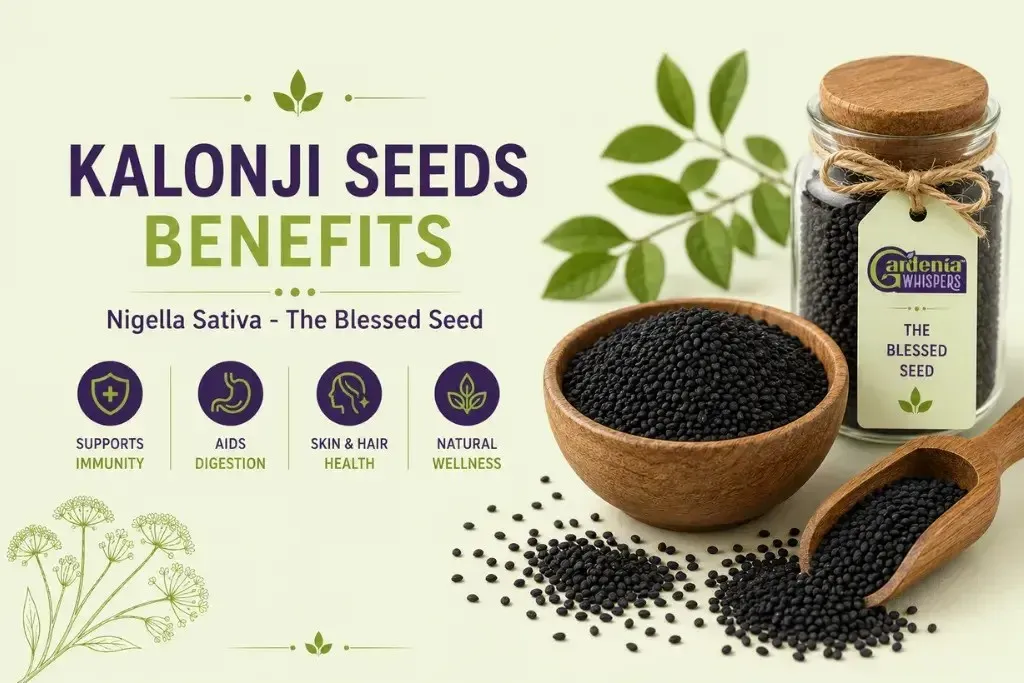
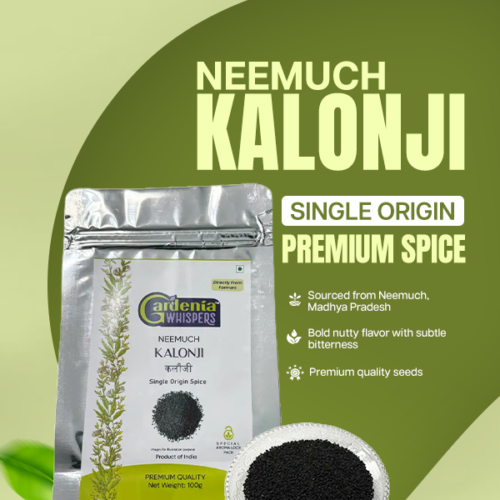
Buying small black seeds from a local store often means unknowingly getting a cheap and medicinally worthless substitute. Dishonest suppliers frequently replace real Nigella sativa seeds with flat, bitter onion seeds (Allium cepa), which contain none of the active compounds that make kalonji medicinally valuable. If you are looking for genuine health results, understanding the kalonji seeds benefits begins with knowing exactly what is – and what is not – in your spice jar.
The healing power of kalonji – referred to in Hadith as “the blessed seed” – comes from its naturally high concentration of thymoquinone, the primary bioactive compound responsible for its anti-inflammatory, antioxidant, and immune-supporting properties. Achieving these benefits requires botanical authenticity, single-origin sourcing, and total purity. In this article, we examine the science behind kalonji’s health applications, how to identify onion seed adulteration, and why origin determines everything.
Kalonji Seeds Benefits for Daily Wellness
Scientific evidence for kalonji seeds benefits spans chronic inflammation management, immune system support, and metabolic regulation. Pure Nigella sativa seeds contain potent phytochemical compounds that contribute to sustained physical vitality when used consistently over time.
Cellular Protection and Immunity
The immune-modulating and antioxidant properties of kalonji have been recognised in traditional medicine for centuries and are now supported by modern phytochemical research.
Immune System Support: Daily intake of whole or ground kalonji seeds has been shown to enhance white blood cell activity, supporting the body’s natural defence mechanisms against seasonal illness and infection.
Antioxidant Protection: The thymoquinone in nigella sativa actively neutralises free radicals, protecting body tissues from oxidative stress caused by environmental pollutants and processed foods.
Ayurvedic and Traditional Use: Exploring traditional kalonji ke fayde reveals how ancient Ayurvedic and Unani practitioners used black seeds to treat respiratory complaints, digestive disorders, and inflammatory skin conditions – applications now corroborated by modern research.
Year-Round Cellular Defence: Consistent daily use delivers ongoing kalonji seeds benefits by maintaining cellular antioxidant capacity – particularly valuable during seasonal transitions when immunity is most vulnerable.
Metabolic Balance and Cardiovascular Support
Adding pure Nigella sativa to your diet can support healthy blood sugar levels, cholesterol balance, and overall cardiovascular wellness.
Blood Sugar Regulation: Clinical research on nigella sativa benefits has shown that regular consumption can help lower fasting blood glucose and improve insulin sensitivity – making it a meaningful dietary support for those managing blood sugar.
Heart Health via Essential Fatty Acids: Black seed oil benefits include a significant content of essential omega fatty acids – particularly linoleic acid – which support arterial elasticity and healthy lipid profiles.
Holistic Wellness: Kalonji ke fayde as documented in traditional medicine extend to supporting kidney function, liver health, and hormonal balance – reflecting the seed’s broad spectrum of bioactive compounds.
Metabolic Stability: Regular use of kalonji seeds helps maintain stable energy levels by preventing sharp blood sugar fluctuations that lead to fatigue and cravings.
For a broader look at how single-origin Indian spices support daily health, read our complete Indian spice guide.
Why Thymoquinone Content Determines Everything
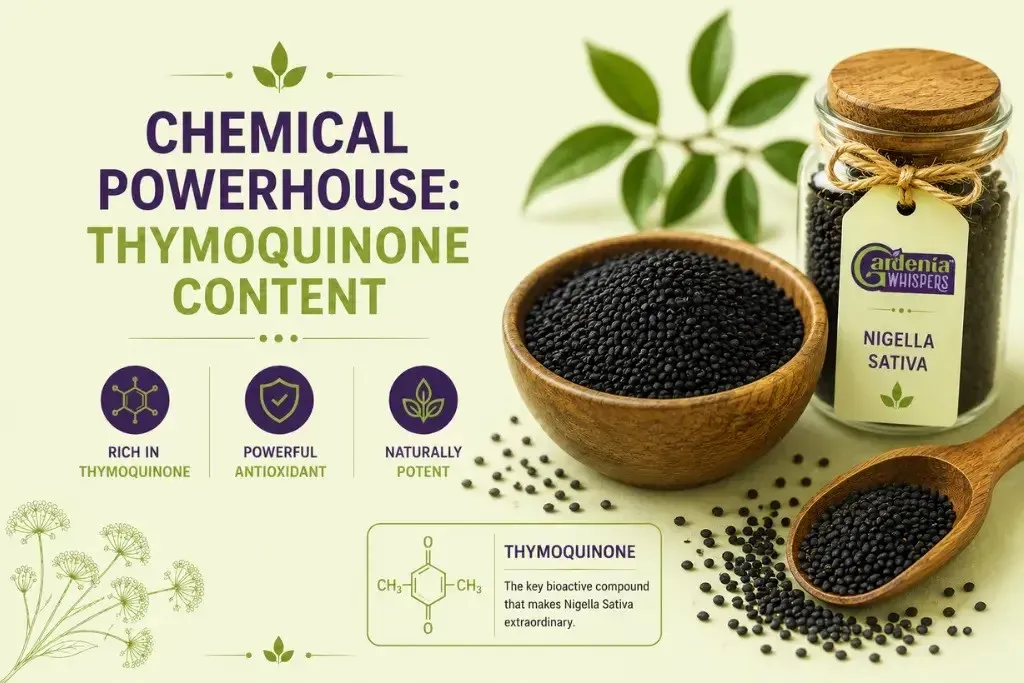
The therapeutic effect of true black seeds is almost entirely determined by their thymoquinone concentration – the primary quinone compound responsible for kalonji’s anti-inflammatory, antioxidant, and antimicrobial activity. Seeds with depleted thymoquinone content – common in old stock, poor-origin seeds, and adulterated products – deliver none of the documented health benefits.
Why Bioactive Compound Verification Matters
Proven Anti-inflammatory and Antioxidant Effects: High thymoquinone content is the direct mechanism behind kalonji’s ability to fight inflammation and support cellular regeneration throughout the body.
Single-Origin Quality Advantage: Neemuch kalonji, sourced from the fertile growing belt of Madhya Pradesh, consistently delivers higher thymoquinone concentrations than commodity seeds blended from multiple unverified origins.
Maximum Medicinal Potency: Choosing thymoquinone-rich seeds guarantees the highest possible medicinal power – whether you are consuming the raw seeds or using cold-pressed black seed oil derived from them.
Authenticity of Nigella Sativa Effect: To experience real nigella sativa benefits, seeds must be botanically authentic and retain their full volatile oil content – something that cannot be verified from appearance alone in blended or mass-market products.
Kalonji vs Onion Seeds: How to Spot Adulteration
Being able to distinguish between kalonji vs onion seeds is the single most important quality check for anyone purchasing black seeds for health use. Mass-market suppliers frequently substitute genuine Nigella sativa with onion seeds (Allium cepa) – seeds that look superficially similar but contain zero thymoquinone and have no medicinal value.
For broader guidance on testing any spice for adulteration at home, read our guide on how to identify pure spices.
Physical and Chemical Differences: Kalonji vs Onion Seeds
Shape and Structure: Genuine Nigella sativa seeds are three-sided, matte black, and triangular with a slightly rough surface. Onion seeds are flatter, more disc-like, and curved – a difference clearly visible under basic inspection.
Aroma and Taste: Authentic kalonji has a warm, peppery, resinous herbal aroma – sometimes described as a cross between oregano and black pepper. Onion seeds smell unmistakably of onion or garlic. Any onion-like scent means the seeds are adulterated.
Thymoquinone Presence: Genuine Nigella sativa contains thymoquinone. Onion seeds contain none. No thymoquinone means no anti-inflammatory, antioxidant, or immune benefit – regardless of packaging claims.
Oil Content: Genuine kalonji seeds yield a dark, aromatic cold-pressed oil with a distinctive peppery flavour. Onion seeds yield a pale, odourless oil with no medicinal value.
Why Neemuch Kalonji Stands Alone
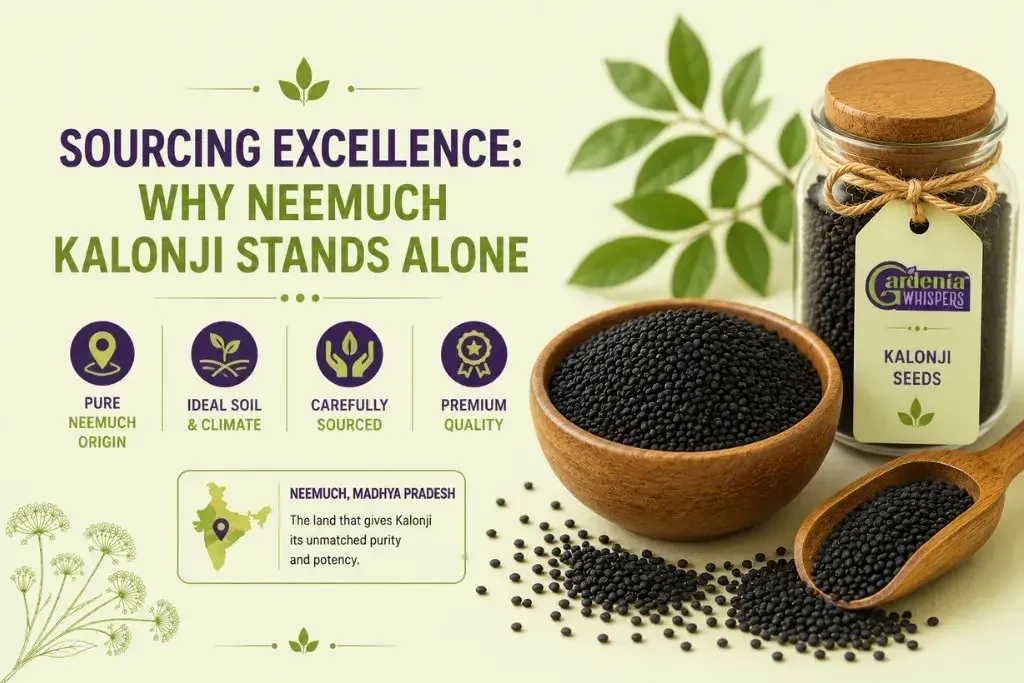
The geographic origin of Nigella sativa seeds directly determines their thymoquinone concentration, aroma, and medicinal value. The specific soil composition and climate of the Neemuch belt in Madhya Pradesh produce seeds that consistently outperform commodity-grade kalonji on every quality measure.
The Geographical Advantage of Neemuch
Optimal Growing Conditions: Neemuch kalonji grows in well-drained, nutrient-rich soil under intense Central Indian sunlight – conditions that force the plant to accumulate high thymoquinone concentrations in the seed as a natural stress response.
High Bioactive Content: Freshly harvested Neemuch kalonji delivers significantly higher thymoquinone concentrations than seeds blended from multiple unverified origins – a difference directly reflected in potency and aroma.
Cold-Press Compatibility: High-quality Neemuch kalonji, when cold-pressed without chemical solvents, yields a full-spectrum black seed oil that retains its complete thymoquinone and fatty acid profile.
Traditional Authenticity: The documented kalonji ke fayde in Ayurvedic and Unani tradition were based on seeds with exactly this kind of high-thymoquinone, single-origin profile. Our Neemuch kalonji is sourced and packed to preserve this standard in every batch.
Use this table to quickly identify genuine Nigella sativa versus common onion seed substitutes:
Feature / Metric
Genuine Nigella Sativa
Cheap Onion Seed Substitute
Physical Appearance
Matte black, three-sided triangular shape
Dull black, flat, curved disc shape
Aroma Profile
Warm, peppery, resinous herbal scent
Sharp, pungent onion or garlic smell
Active Compound
Rich in therapeutic thymoquinone
Zero thymoquinone present
Primary Health Value
Delivers proven nigella sativa benefits
Basic culinary flavour only – no medicinal value
Being aware of the full range of kalonji seeds benefits gives you complete confidence when selecting natural health solutions. Whether you are consuming whole seeds for their kalonji ke fayde or cold-pressing them for black seed oil, purity is the non-negotiable foundation. Remembering the physical and chemical differences between kalonji vs onion seeds protects your family from one of the most common adulteration practices in the Indian spice market.
Key Takeaways for Conscious Consumers
Confirm Nigella Sativa Authenticity: Verify that the black seeds you buy are three-sided Nigella sativa seeds – not flat, disc-shaped onion seeds. Shape and aroma are the fastest checks.
Choose Thymoquinone-Rich Seeds: Select Nigella sativa seeds or oils verified to contain high thymoquinone content – the single most important quality indicator for medicinal use.
Inspect Before Purchase: Check for uniform three-sided shape, matte black colour, and an absence of flat disc-shaped seeds, stems, or dust particles.
Use Cold-Pressed Black Seed Oil: For therapeutic oil use, choose cold-pressed black seed oil from a verified single-origin source. Chemical extraction destroys the thymoquinone and fatty acid profile.
Source Neemuch Kalonji: For the highest essential oil density and most reliable health results, choose Neemuch kalonji from a verified, direct-sourcing brand.
Conclusion: Experiencing Pure Quality with Gardenia Whispers
Harnessing the maximum healing potential of kalonji requires moving beyond cheap imitations and choosing seeds that are botanically verified, single-origin, and free from adulteration. Understanding how to identify genuine Nigella sativa protects your health investment and ensures that every gram of kalonji you consume is actually working. Relying on onion seed substitutes means paying for a product with zero thymoquinone activity and zero health benefit.
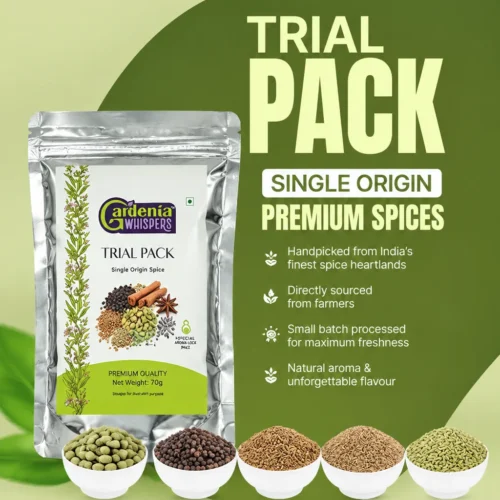
Gardenia Whispers is committed to supplying 100% pure, single-origin Neemuch kalonji sourced directly from Madhya Pradesh. Every batch is cleaned and verified to eliminate adulteration before packing – so the thymoquinone that makes kalonji medicinally powerful reaches you intact. Explore our complete Indian spice guide, try our single-origin trial pack, or go directly to our Neemuch kalonji product page to bring genuine quality into your kitchen today.
Frequently Asked Questions About Kalonji Seeds Benefits
What are kalonji seeds and what is their scientific name?
Kalonji seeds are the seeds of the Nigella sativa plant, a flowering herb in the Ranunculaceae family. Also known as black seeds, black cumin, or black caraway, they are botanically distinct from both cumin (Cuminum cyminum) and caraway (Carum carvi). Their primary active compound is thymoquinone, responsible for most of their documented health benefits.
What is thymoquinone and why does it matter?
Thymoquinone is the primary bioactive quinone compound in Nigella sativa, typically making up 27 to 57 percent of its essential oil content depending on origin and growing conditions. It drives kalonji's anti-inflammatory, antioxidant, antimicrobial, and immune-modulating properties. Without sufficient thymoquinone — as is the case with onion seed substitutes — black seeds deliver no medicinal benefit.
How do I identify genuine kalonji vs onion seeds?
Genuine kalonji (Nigella sativa) seeds are three-sided, matte black, and triangular with a warm, peppery, resinous aroma. Onion seeds are flatter, disc-shaped, curved, and smell of onion or garlic. Press a few seeds — genuine kalonji releases a herbaceous, peppery oil. Any onion-like smell confirms adulteration.
What are the main health benefits of kalonji seeds?
Kalonji seeds support immune function by enhancing white blood cell activity, provide antioxidant protection against oxidative stress, help regulate fasting blood sugar levels, support healthy cholesterol and arterial function through essential fatty acids, and have demonstrated anti-inflammatory properties in clinical research. All these benefits are dependent on the thymoquinone concentration of the seeds.
What is black seed oil and how is it different from whole kalonji?
Black seed oil is cold-pressed from whole Nigella sativa seeds and provides a concentrated form of thymoquinone and essential fatty acids — particularly linoleic and oleic acid. Whole kalonji seeds deliver the same active compounds alongside fibre and a broader range of plant compounds. Cold-pressed oil from high-quality Neemuch kalonji is the most potent delivery method for therapeutic use, while whole seeds are more practical for daily culinary use.
Can I use kalonji seeds every day?
Yes. One teaspoon of whole or ground kalonji seeds daily — in food, warm water, or honey — is widely considered safe for most adults. This provides consistent thymoquinone exposure for ongoing anti-inflammatory and antioxidant support. Those who are pregnant, on blood-thinning medication, or managing a chronic health condition should consult a doctor before beginning daily therapeutic use.
Why is Neemuch kalonji considered superior to regular market kalonji?
Neemuch, in Madhya Pradesh, is one of India's primary Nigella sativa growing regions. The combination of well-drained soil, intense sunlight, and low humidity forces the plant to concentrate thymoquinone in the seed. This produces a more potent, more aromatic kalonji than seeds from blended commodity sources. Our Neemuch kalonji is sourced directly from this belt to guarantee maximum bioactive content.
How do I store kalonji seeds to preserve their potency?
Store whole kalonji in an airtight glass jar in a cool, dark location away from heat and moisture. Stored correctly, whole seeds retain their thymoquinone content for up to two years. Grind only what you need immediately before use — ground kalonji loses volatile oil content within weeks due to oxidation. Black seed oil should be stored in a dark glass bottle and used within six months of opening.
Where can I buy authentic, high-thymoquinone kalonji online?
Gardenia Whispers sources and sells Neemuch kalonji directly from the Madhya Pradesh growing belt, with every batch cleaned and verified to remove onion seed substitutes before packing. You can also explore our single-origin trial pack to experience single-origin spice quality across multiple varieties.
Health information is research-based and for educational purposes. Not a substitute for medical advice.